

McCarthy Improvement started in Davenport 129 years ago and never stopped. It only grew.
It began in 1897 when 17-year-old Patrick F. McCarthy immigrated to the United States from Ireland. He worked his way up in the construction world and eventually founded the McCarthy Stone Company.

In 1903, the company was incorporated and became the McCarthy Improvement Corporation. The improvements started the following year with the paving of Main Street in Davenport.
By 1915, the company was commissioned to help build Hotel Blackhawk in downtown Davenport, which still stands today. By the 1930s, the company moved into the lock and dam business, and at the end of the decade completed the foundation for the Centennial Bridge that still connects Davenport to Rock Island.
The projects for McCarthy never stopped.
People are also reading…
Today, the company is on its fourth generation of leadership, with the fifth generation waiting in the wings. Greg Bush is the current CEO of the McCarthy-Bush Corporation, but is ready to turn in his hard hat.
After more than 40 years in business, Greg will hand the reins to his son, Mike Bush, in April. Mike will represent the fifth generation of family ownership.

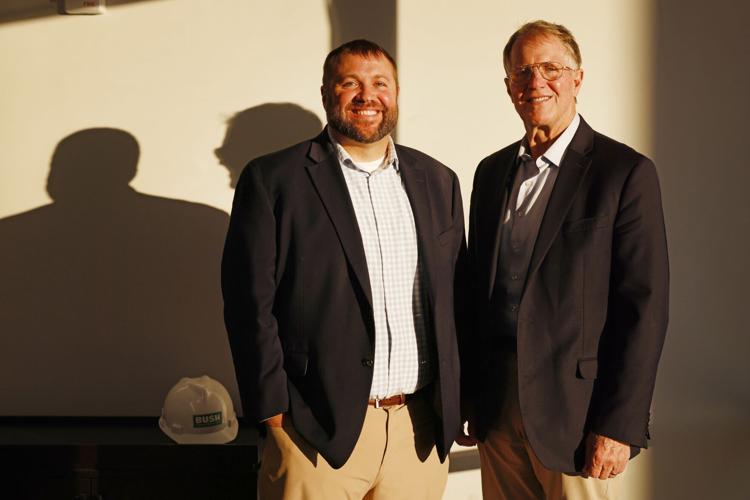
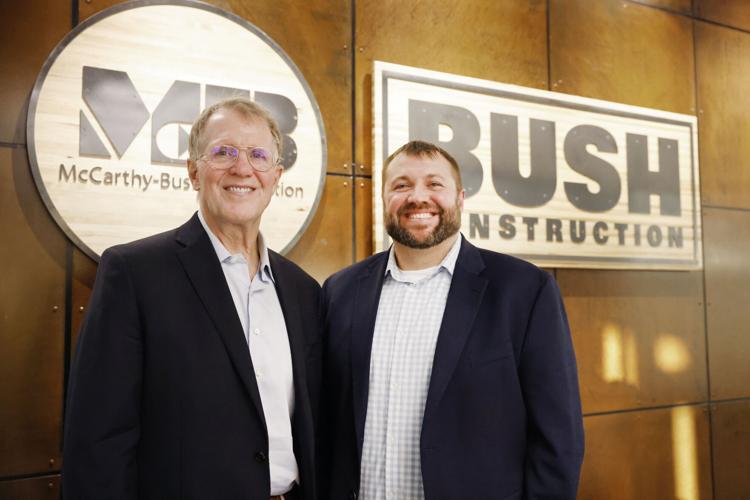
Mike Bush, and his father, Greg Bush pose for a portrait at Bush Construction on Thursday, December 4.
Joining the family business wasn't the plan
For Greg, staying in the family business was never the original plan.
"Previous to this I was a pilot in the Air Force, and then I started working at Linwood. I was above the ground and below the ground, and never put my feet on the ground," he said. "I was in the Air Force when my dad acquired control, and he made us all offers we couldn't refuse. So we all ended up here. I have six siblings, five brothers and two brothers-in-law. We all worked together for a long time."
After leaving the Air Force, Greg was stationed at the Linwood Mining and Minerals Corporation in Buffalo, Iowa. The mine was purchased for $32,000 in 1944, the equivalent of nearly $600,000 today, when it went up for auction.
"The reason they bought Linwood was it was a quarry then that had gone bankrupt, and all they wanted it for was the construction equipment," Greg said, explaining that because of World War II, it was difficult to buy equipment new.
Ultimately, the McCarthy family started running the quarry and realized it was a profitable revenue stream. The kilns were rebuilt over the next few decades, Greg said and eventually went underground in the late '50s.
By the time Greg arrived in 1985, he held a variety of positions in the mine, learning the family business from the ground up — literally.
"My dad made up a title: vice president of development," he said with a chuckle, noting he was the first and last to hold that job title. "It was a case of just learning the business, because I had worked there in the summer a little but, but I had to learn."

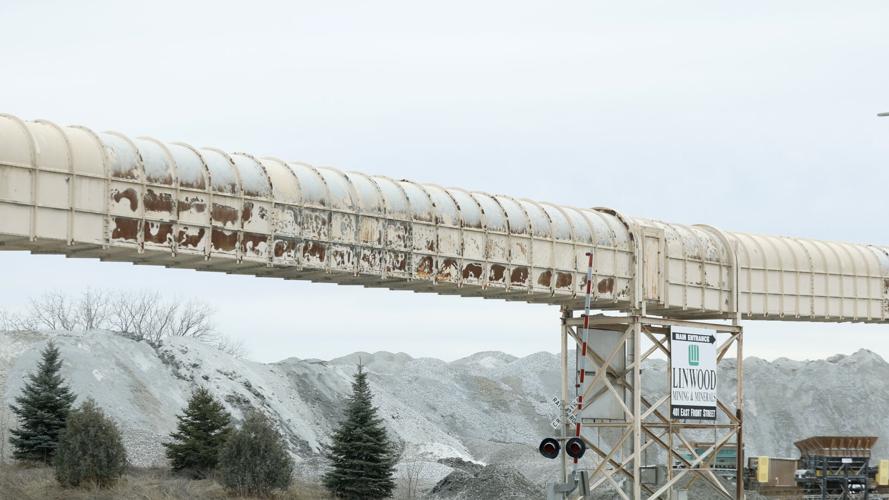
Linwood Mining and Mineral Corporation mines limestone, specifically calcium carbonate, which is used for making shingles, livestock feed, cement, glass and more.
Limestone uses include steel manufacturing, calcium supplement
At Linwood, workers do almost everything with a chemical grade of limestone that there is to do, Greg said. It gets burned to create calcium oxide, which is used in steel manufacturing and water treatment. They make a finely ground limestone used as a calcium supplement in the agriculture industry and for roofing shingles — one of Linwoood's biggest markets, considering roofing shingles are 67% limestone by weight.
Linwood owns about 1,500 acres of mineable land, but so far has mined about 800 acres, all underground.
"You hardly know we're there," he said. "The less you hear of us, the better."
After working in the mine for a while, Greg climbed the ladder all the way to the president's office and ran the mine himself for about seven years. In 1998, he was chosen to become the next CEO of the McCarthy-Bush Corporation.
But, it wasn't really a job he wanted at the start. In fact, coming back to the Quad-Cities was never his plan at all.
"I was going to stay in the Air Force and fly jets," he said. "I loved being in the Air Force. I loved it, so it was a tough decision. It was a 50/50 decision."
At the time, Greg was a father of three and eventually became a father of six. The Quad-Cities was the perfect place to raise his family, he said, and he was able to come to an agreement with his father on a few things, too.
Becoming CEO was a surprise
The company would get an airplane so Greg could pursue his passion, and he still wanted to travel. That was doable, his father said. Still, a chance to become the CEO was never in the cards, Greg insisted. He never knew it was an opportunity at all.
"It was a surprise. The opportunity really didn't exist. I went to the Air Force Academy, and I was planning on a career in the Air Force, but the opportunity came while I was actually stationed in England," he said. "And I always say, my dad made me an offer I couldn't refuse, and it's been a great, great decision 41 years later."
In April, Greg is stepping down from his role as CEO to assume the title of president of the overall corporation and chairman of the board. The decision wasn't easy, he said, but he's following a gut feeling that now is the right time.
"It's time to let the next generation have their opportunities to do with the company what they can do, make their own decisions," he said. "It's been a great career, I've loved it. I still enjoy it."
Greg will stay involved with the family business through the board of directors, but he also serves on several family boards around the country, he said. It will allow him to continue engaging in family business, he said, which ignites his true passion: helping others.
The next generation will take over
It's a trait recognized in his son, Mike, who will be taking over as CEO of the company after his father retires. But the decision to pass the business on to a fifth generation, Greg said, was not automatic.
"Candidly, I was tough on my kids about coming back to the company because there are a lot of good things, but there are tough things, too. Especially in my position, when you have to tell your brothers, or brothers-in-law that things aren't going well," Greg said. "I didn't want any of my children coming back here unless they really wanted to be here. ... Michael was very insistent. I questioned him a lot, but I could see the passion for the business, and here he is today."
That passion, Mike said, is something he recognized in his father. It was clear he loved his job and whenever Mike asked questions, his father lit up.
"When I was growing up, through high school and college, I would come back during the summers and I would shovel rock at Linwood or set dowel baskets in the southeast for McCarthy," Mike said. "I always thought that this was a place I wanted to end up, and the more I did those things the more I really considered it learning the business from the ground up."
Now a father himself, Mike said that experience reflects the advice he gives to parents now: If you love what you do, share it with your children. But before Mike could join the family business, there was one more rule he had to follow.
"We did institute a rule where anybody in the fifth generation coming back first had to work outside the business for at least three years, just to let them establish who they are as a worker without being a family member with the name in the business," Greg said. "And I think that was very important."
Mike followed the rules. After college, he ended up at Wells Fargo in Chicago when he and his wife learned they were about to become parents.
With her wanting to stay home with their newborn, Mike knew they would need to move somewhere more affordable and started the conversation with his dad about moving to Minnesota, where the company owned a satellite crushing facility, and where he and his wife went to school.
He was in no hurry to return to Iowa, he said.
Returning to the family business in Iowa
The Twin Cities seemed like a go until Greg spoke with leadership, and they reported Mike was needed at the mine. Iowa was not only back on the table — it was the only option.
"I always knew, ultimately, if I wanted to work (in the family business), I would end up back here," Mike said. "Coming back here was a great decision. My boss was absolutely right that this was the right place. It just wasn't what I thought at the time."
When he started at Linwood in 2011, he was given the title of management trainee and tried out a variety of roles to get to know the business.
"I started in the lab and I worked as a night supervisor at the plant. I went with the sales staff. I went underground. I kind of spent time in every department and was able to learn the business that way," he said.
The process was worth it, but not always fun, he said.
"It was very frustrating at the time, because you're young in an organization and you want to show value, and people kept telling me, 'Your job is to learn,'" he said. "Having said that, it was the best thing that could have happened to me, because by the time I was ready to contribute, I just had such a familiarity with every aspect of the business."
But there's another key element that Greg implemented to help both his son, and his business.

Greg Bush and his son, Mike Bush pose for a portrait at Bush Construction on Thursday, December 4 in Davenport.
Finding a mentor is a key step
"When Michael was coming back, I found him a mentor," Greg said. "I went to Jonathan (Wilmshurst), who was running Linwood at the time, and I said ... 'I'm staying out of it. You do whatever you need to do to get him ready.' And that really worked well, too, just keeping our distance and letting Mike have a guy — not a family member — show him the way."
Greg said the mentorship worked well, and Mike was pushed in a way that helped him grow faster.
"The whole concept of keeping the family (out of it was) when you're here to learn, get somebody that is comfortable teaching and isn't afraid to tell a family member that you're going to work on a Friday night even though there's football," Greg said.
In 2021, some family members were bought out of the company due to not being interested in the family business. This got Greg thinking about the future, and his own impending retirement and marking the end of the fourth generation of leadership.
At the time, he spoke with his CFO, Mike Daniel, about possibly being a bridge between the fourth and fifth generation until someone from the family was ready to take over. But, Daniel decided to retire before that could happen.
And Greg was retiring, too. That meant the board of directors, mainly men from the Bush family, had to think fast.
"The two choices were, do we look for an outside guy for a couple of years, which is a risky hire, or do we just hand it right to a family member?" Greg said. "Once we decided that was probably the better option, it was, who's the most qualified to be that? And I'll say it, if you looked at family members or non-family members, Mike's the guy."
At the time, Mike had very recently graduated to the role of president at Linwood, which is undergoing the largest capital expenditure in the history of the company and the board wanted someone with experience to keep an eye on things. The idea was to allow Mike to get a little more experience and Linwood get its new plant built before he graduated up the company ladder.
Ultimately, he climbed up faster than anticipated.
"(Mike has) shown through his leadership and his abilities that he is up to the task. It's a big task, and he knows it, he'll tell you that himself," Greg said.
Mike said when the opportunity came his way to represent the fifth generation, he had to do a lot of thinking. In the end, he told the board he didn't feel he was the best man for the job today, but his commitment to hard work would show he would become the best man for the job in the years to come.
It was an answer the board approved of.
"I tell people within the organization, you guys are all competing for second on who cares the most because I know I'm always going to care the most, and it's always going to be the most important to me, and everyone else is going to be competing for seconds," Mike said.
Once reality set in of what was to come, Mike said, part of him was thrilled to lead, while the other part of him was nervous. It's a big responsibility, he said, but the pride of continuing on in the business and being part of the growing legacy is what keeps him coming to work every day.
"You can call yourself the owner, but really it's like you're a steward," Mike said. "The way I view it, none of us here started this. It was given to us, so it's our responsibility to build on it and then give it to the next generation."
He said the metaphor his dad always used was that the business was like a relay race: it's your turn with the baton and when you've done all you can do, you pass it off.
"The truth is, I came to work here because I'm very close to my dad. I wanted to spend time with him and so getting into the role of my dad and my grandpa before him, who was very influential to me, was very important to me," Mike said. "There's a lot of, I would say, internalized pressure of making sure you do the right things for the business moving forward so that somebody else can sit in this chair eventually."
Photos: A look into the Linwood Mining & Minerals Corporation limestone mine

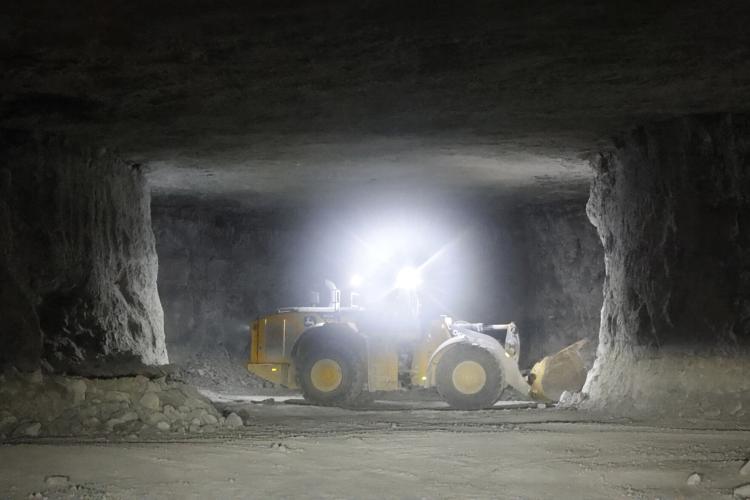
A front loader dump truck moves shot rock from the Linwood Mining and Mineral Corporation mine on Tuesday, January 13, in Davenport. There are usually five to six truck moving rock at the same time, making the 19-minute round trip.

Joe Haynes, the mine supervisor, walks around the limestone mine on Tuesday, January 13, in Buffalo. Each person going into the mine must watch a safety video, wear proper PPE such as a hard hat, vest, and steel toed boots. Each person must also carry a personal emergency respirator at all times as well.

A map of the active mining areas and escape routes hang on a wall in the underground offices in the Linwood Mining and Mineral Corporation mine.

Linwood Mining and Mineral Corporation mines limestone, specifically calcium carbonate, which is used for making shingles, livestock feed, cement, glass and more.

Limestone is pulverized into a powder that will be used for livestock feed, which will be sold to Nestle Purina or directly to farmers.

A reflective arrow denotes an emergency route through the Linwood Mine on Tuesday, January 13, in Davenport. The mine has two quick routes to follow in case of emergency.

A mining head attached to an excavator chips away at rock at a Linwood Mining and Mineral Corporation mine on Tuesday, January 13, in Davenport.

Mine supervisor Joe Haynes drives around the Linwood Mining and Mineral Corporation mine near Buffalo on Tuesday, January 13. Haynes has been with Linwood for 28 years.

Breakrooms, or the Doghouse as employees affectionately call it, are put underground, closer for miners to get to during their shift at the Linwood Mining and Mineral Corporation mine.

A portion of the Linwood Mining and Mineral Corporation mine is dedicated space for a shop for maintaining mining equipment.

A dump truck moves shot rock from below ground to the above ground processing at Linwood Mining and Mineral Corporation on Tuesday, January 13, in Davenport.

A drill sits in the underground shop at the Linwood Mining and Mineral Corporation mine on Tuesday, January 13, in Davenport.

Linwood mine offices are built into the rock pillars underground, using the abundant available space underground.

Mining supervisor Joe Haynes shows off a tool that miners will use to test the rock material before blasting rock loose on Tuesday, January 13, in Davenport.

Linwood Mining and Mineral Corporation's Joe Haynes shows off a plat map that shows where the company has mined near Buffalo on Tuesday, January 13.

A look at Linwood Mining and Mineral Corporation's above ground operation on Tuesday, January 13, in Davenport.

Trucks move shot rock from underground to above ground at Linwood Mining and Mineral Corporation on Tuesday, January 13, in Davenport.