



A Quad-Cities-based community college is making a big impact on the community it serves.
Black Hawk College in Moline employed a study that showed the school is an economic engine for the region, contributing nearly $291 million to the local economy during the 2023-24 fiscal year. The study, conducted by Lightcast, used two lenses — an economic impact analysis and an investment analysis — to estimate benefits to key stakeholder groups and to the region, according to a news release.
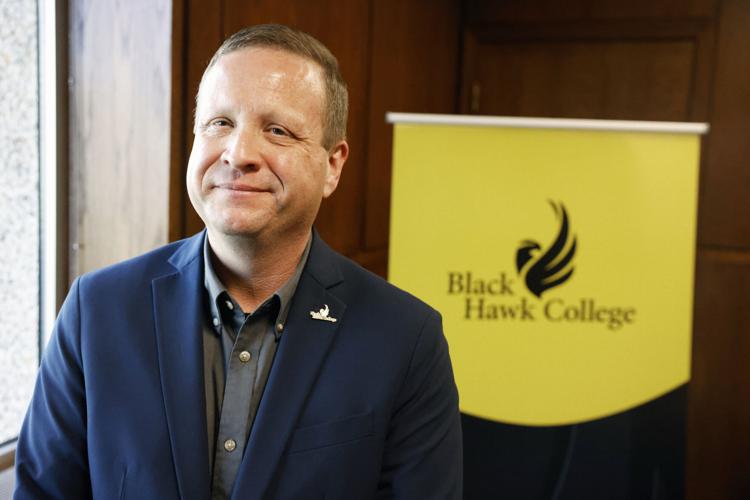
"This report makes clear that Black Hawk College is more than a place of learning,” said Jeremy Thomas, president of Black Hawk College. “For nearly 80 years, we have been a driver of economic growth in our region. When we invest in our students, we are investing in our workforce, our employers, and the long-term strength of our communities."
People are also reading…
The economic impact study was commissioned by Black Hawk College after the state of Illinois commissioned its own, Thomas said. Data released in April indicated community colleges have a $27.2 billion impact on the state, which led the college's leadership to commission its own study to go deeper into Black Hawk's impact on the local region, he said.
"One of my many jobs is to talk about how we impact our students and, more importantly, the community in which we serve. We often focus in on the individual but truly, it's a larger impact, and now we have the data to back that up," he said. "I'm not having to sell what Black Hawk means to our community. That's always been easy for me since I got here."
Prior to accepting the job at Black Hawk College, Thomas worked in Oklahoma and was attending a community meeting when it was announced he was leaving his position for the community college in Moline. It turned out that a woman he'd served on a board with for years was a Black Hawk College alumna.
"Our impact is national, and sometimes we don't even realize it. The report really focuses in on that," he said. "Being able to see the numbers was eye-opening, but at the same time I was not overly surprised."
Black Hawk serves nine counties in northwestern Illinois, covering a population of more than 225,000 residents. During the 2023-24 fiscal year, Black Hawk College served more than 8,000 students and during the 2024-2205 school year grew by 9%. That number is looking closer to double digits for this upcoming school year, Thomas said.
"That puts us at the top of the state average. When you look at all the community colleges, we're well above most of our peers, and growth over the last two years was well above the national average," Thomas said, adding the national average is hovering around 3%. "It's very deliberate. We've invested in our campus, we've invested in our students. And I think it's showing."
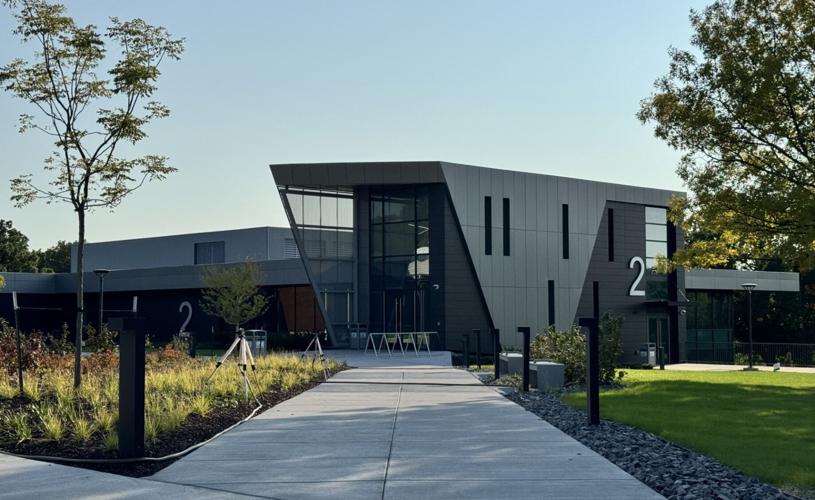
Part of the reason for growth, he said, is the diversity of the two campuses. The main campus in Moline has historically been more transfer-focused, but the tide is shifting on that narrative.
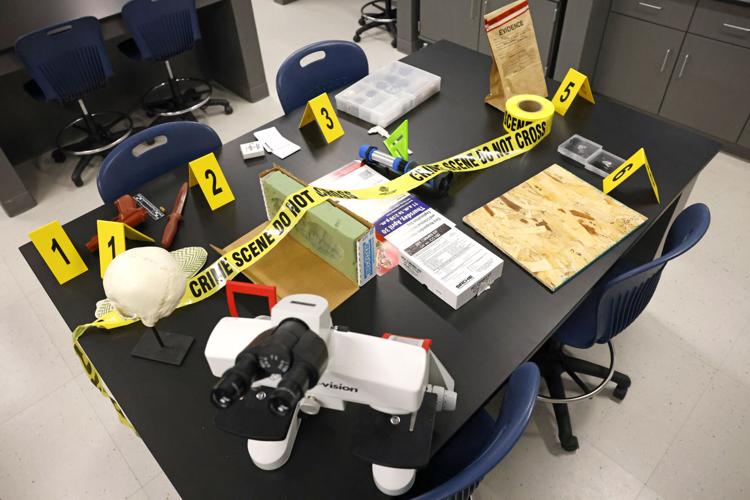
At the eastern campus in Galva, the population is more agriculture and career and technical education-focused. Between the two campuses, Black Hawk offers 85 different certificate and degree programs.
Another big statement setting Black Hawk apart is the local impact. The study showed 98% of Black Hawk College students remain in the area after graduation.
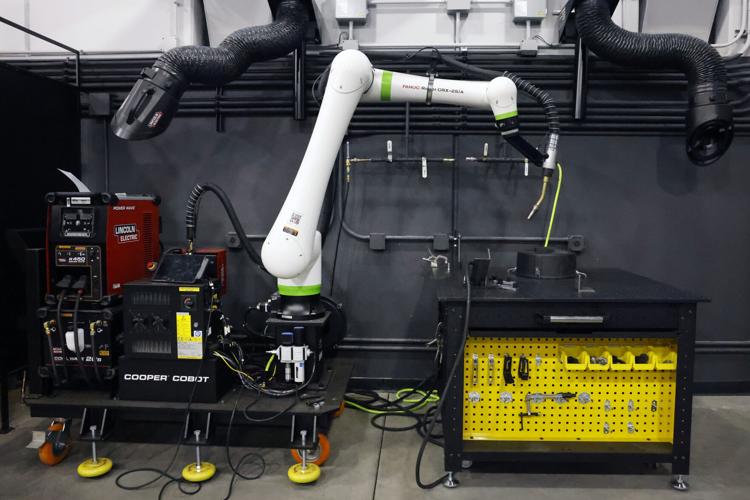
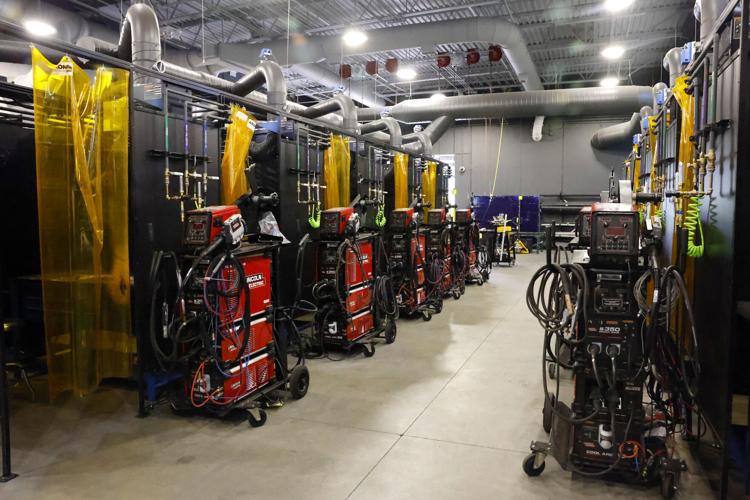
Thomas said the fastest growing programs at Black Hawk are in career and technical education — a national trend that's hitting home in Moline.
"You're even seeing four-year schools to try to figure out how to get into the certificate game, because, again, savvier students," Thomas said.
Right now, the college is seeing about half of students coming in to earn credits before they transfer, but the other half are coming in for the career and technical side.
The programs are all designed with the help of industry partners to make sure Black Hawk is offering the training that matches the jobs available in the community. It's a win for everybody, he said, with employers getting quality workers, Black Hawk turning out strong graduates and students getting into jobs quickly in the area.
Thomas said one way Black Hawk is able to maximize on this plan is by scrutinizing its own work. Programs designed a few decades ago are not the same programs needed today, he said, using the example of computers.
At one point, every degree required a computer program of some sort, but with students already coming in with that knowledge, it's no longer necessary. Black Hawk does the same thing with its curriculum, he said, to dig into courses to see what is no longer necessary and what courses they can add in instead.
A big piece of that accessibility, Thomas said, is keeping the costs low. Black Hawk has the lowest tuition rate in the area, he said, and that's done on purpose.
College should be accessible for students who want access to a quality, affordable education at home. Especially as the attitude surrounding community college shifts, and they are looked at as a first option, instead of a second or third.
"The student of today is much more savvy about that sort of stuff than in previous generations," Thomas said, adding students are not as focused on using community college as a launching pad for a university, but instead looking to see how a school like Black Hawk can help them get their career started. "I think the institutions that can articulate that add a value. I think that's important, (and) I think that's part of why we're now becoming the choice, or at least one of the choices, and not an afterthought."
Putting students first helps the community as well, Thomas said, adding the economic impact comes from multiple angles, including student impact, salaries and Black Hawk as a business.
"We have a little over 500 full-time and part-time faculty and staff. When you add all those people up together, most of them live local. They don't drive hours to come in, and that really changes the picture there quite a bit," he said. "When you look at the overall impact, you're talking about $291 million just in that one year they sampled."
That number varies year to year, Thomas said, but it's a hefty impact for a school of Black Hawk's size. Black Hawk is not the only community college in the area, and with other major institutions in the region, it competes for students just like any school. But Black Hawk is still able to support one out of every 50 jobs in the community. And that's something to be proud of, he said.
"That shows just how great a value our students are getting," he said. "In 80 years, we've touched a lot of lives at Black Hawk College."
This article is part of QCT Biz, a biweekly newsletter and quarterly business magazine, by the Quad-City Times. More articles, columns and the latest magazine can be found here.