

Social media influencers have taken the internet by storm, and companies are starting to notice.
Influencers can range from individuals talking up a product to entire families advertising locations and experiences. The trick comes in making the marketing campaign feel authentic and not like an advertisement.
That's where Emily Steele has found her niche with her company Hummingbirds, an online platform that allows companies to hire everyday people to create content that helps drive sales for their business.
The CEO and co-founder of Hummingbirds, Steele came up with the concept while working for a marketing agency in Des Moines. A handful of her clients were looking to drive local behavior to specific events and businesses like music festivals, medical spas and yoga classes.

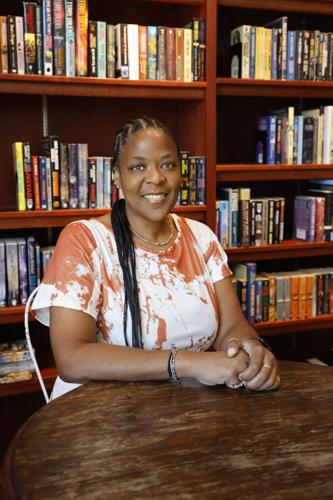
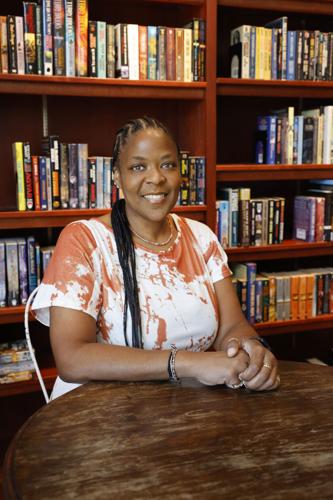
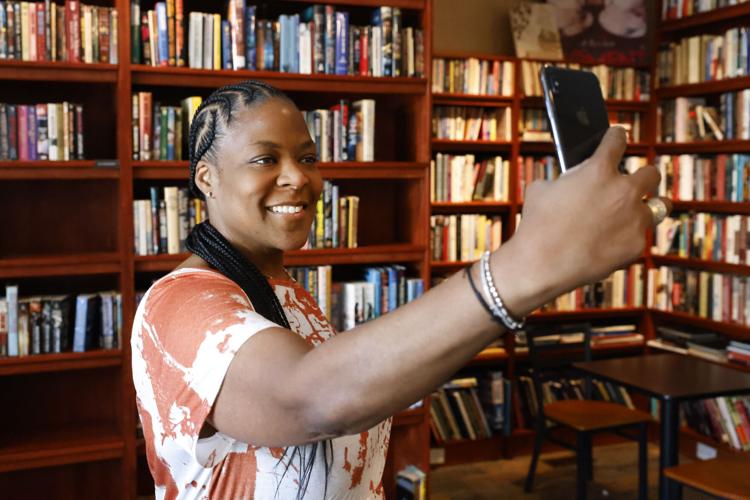
Alisha Hanes, a local Hummingbird influencer, poses for a portrait at The Brewed Book on Friday, Oct. 4, in Davenport.
Steele used several marketing methods to get customers engaged, but social media was among the most successful. Once customers posted photos of themselves participating in events after the fact, they were able to share with their friends and organically spread the word.
People are also reading…
It was a great start but hard to rely on.
"The clients we were working with wanted people to feel like they were part of something," she said. "Word-of-mouth marketing works well on a local level, but it's hard to guarantee. You hope people talk about you at the local level, but it's hard to build a strategy and consistency around that."
Steele said her lightbulb moment happened in 2018, when a new coffee shop opened in Des Moines. A friend of hers posted about their oat milk latte — something Steele had never heard of.
Steele went to the shop, ordered her own and it became her new go-to order. After sharing it on her own social media page and tagging the coffee shop, friends started asking about the drink and where she got it.
Cue a lightbulb moment.
"I went, 'Oh my gosh. This exactly what I want to do for the brands I work with,'" she said. "This works (because) people trust what their peers talk about."
Influencer marketing was starting to gain steam at the time, she said, but no national or global influencers were going to influence her decisions in the place she lived. Instead, Steele decided to do grassroots work and turned to her friends and other peers to market with their own social media.

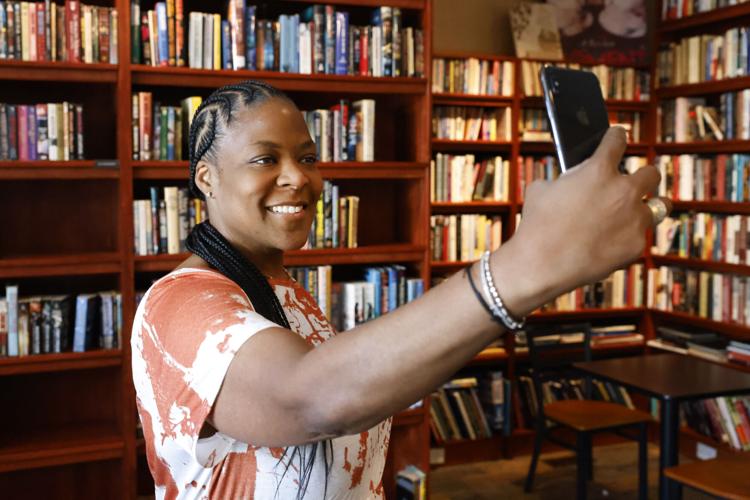
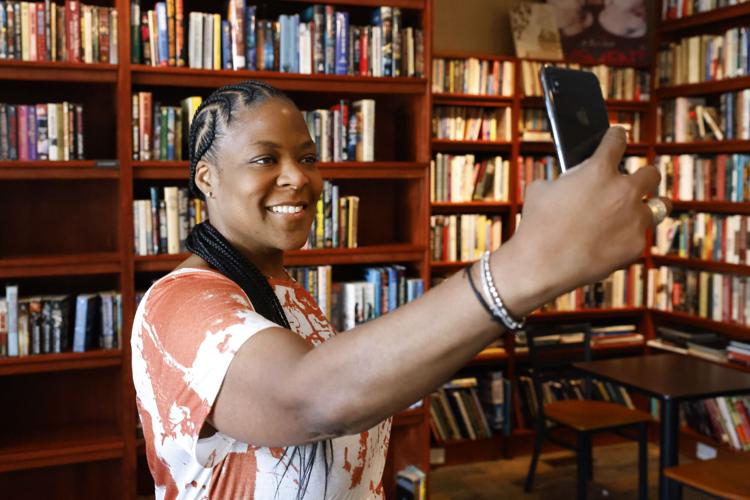
Alisha Hanes, a local Hummingbird influencer, takes a selfie at The Brewed Book on Friday, Oct. 4, in Davenport.
"So I said, 'What happens when I bring together 10, 20 or 30 or those people and tell them to go to a restaurant or something,' " she said. "The short answer is, it works. When you get dozens, if not hundreds, of people talking about the same brands at the same time, it almost has the compounding effect that a press release getting sent out or being shared through the local newspaper used to have."
Bringing together groups like this got the social media campaign off the ground, she said, and had hundreds of people talking. With this concept in mind, she launched Hummingbirds, a new way of social media marketing.
Steele got the company off the ground by commissioning a software for brands to use, similar to a job board, where they could hire their own local people to market products or services.
The idea was to help brands set up campaigns where they could request a local person come to their store, for example, and talk about the special of the week. The local social media creators interested in the campaign, known as Hummingbirds, could apply and the company would have the option to select them for the campaign.
Hummingbirds separates itself from traditional social media influencing in a variety of ways, listing a series of comparisons on its website. For example, influencers traditionally have a niche category of influence, while Hummingbirds have no set category.
Influencers usually work for pay, while Hummingbirds work for perks. Non-local audiences are more likely to follow an influencer, while Hummingbirds are appealing to the communities in their own backyards.
According to the Charle Agency, about 25% of marketers were using influencer marketing in 2024 and 69% of consumers trusted the recommendations given. Major companies have jumped on board with Hummingbirds, too, including Travel Iowa, Olipop and Anderson Erickson Dairy.

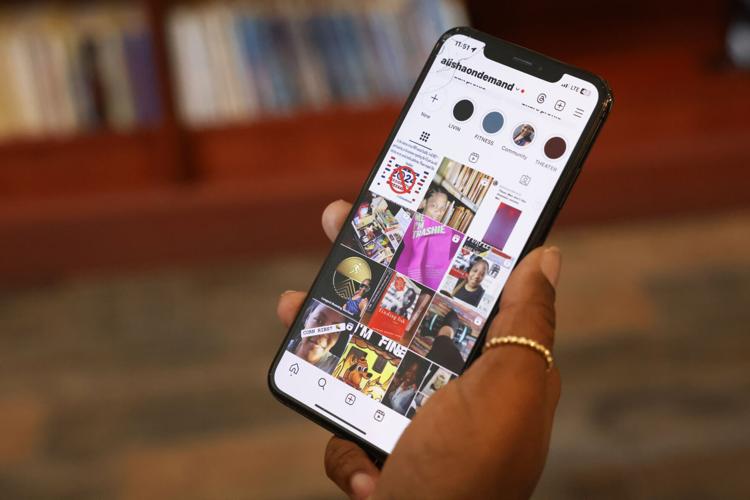
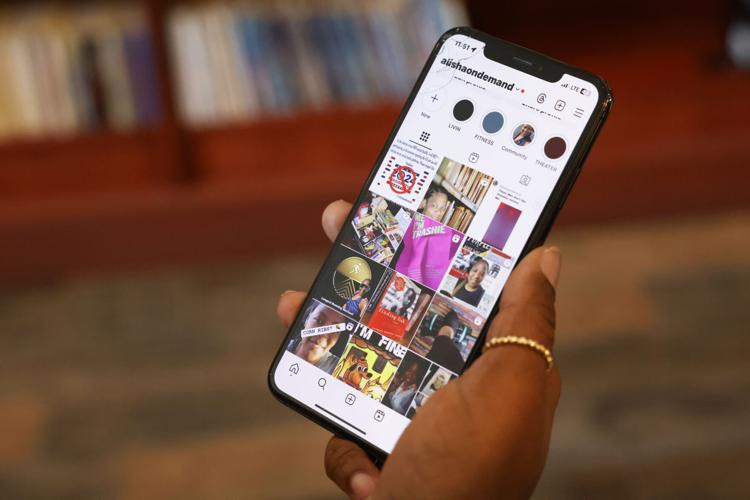
Local social media influencer Alisha Hanes scrolls through her Instagram page, @alishaondemand, on Friday, Oct. 4, in Davenport.
In the Quad-Cities, Alisha Hanes signed up to be a Hummingbird. The ability to choose which campaigns she would like to participate in, she said, adds a layer of authenticity to things from her perspective.
Instead of being told she has to create a campaign for a product or service she may not like or ever use, Hanes has the ability to choose things that align with her personality and lifestyle.
"I usually pick things that I tend to go to anyway, so it's just a part of my every day, except now I'm making a video. So it's not a huge, inconvenient thing," she said.
Once selected, the Hummingbirds receive a non-cash perk, such as a gift card, tickets or free food, for their work and sharing the content on social media. Hanes, who works a full-time job, said the perks were great for creators who were doing it for fun.
In the past, Hanes has created content for a local coffee shop in exchange for a $30 gift card. After purchasing the drink and pastry she needed for the video, she had money left over to go back to the shop on her own time.
Grocery stores will do the same thing, she said, asking her to buy a $10 item in exchange for a $40 gift card, for example. Not only does it help provide a little cushion for her own wallet, it provides a new way for her to share a new product with the public.
"That's what's motivational to me but ... when you go to places in the area and you're from here, you're used to going in and getting the same stuff you always have gotten," she said. "You're not necessarily looking outside the aisles. So this is a way to tell people, 'Hey, did you know this is a Costco product?'”
After Steele made the initial launch in 2018, she quickly began expanding after realizing how simple it was to scale her concept.
"Over the last few years, we've raised $4 million plus in venture capital to scale this across the country," she said.
Steele got into the market just in time. By 2023, the influencer market was worth $21.1 billion and growing, according to the Charle Agency. By October 2024, Hummingbirds had grown to 20 communities, including Omaha, San Antonio, Milwaukee and Cincinnati, with 10,000 creators on board.
It grew in the Quad-Cities, too, and local companies took notice.
Hummingbirds often advertises its business through social media, running campaigns that show how a Bird could help small businesses. Lindsey Row, director of public relations and communications for Visit Quad Cities, came across the company on Instagram.
A former classmate of hers signed up to be a Bird in the Quad-Cities and posted videos online. Row saw the posts, then did a deep dive on the company, she said.
"It resonated with me because I think consumers, especially millennials, are starting to wise up to when they're being marketed to and when it's not authentic," she said.
The pendulum on direct-to-consumer marketing is swinging the other way, she said, and it works. After watching the video her friend posted, she wanted to try the product for herself. It helped that it was a friend testing the product, she said, and it felt more authentic coming from a person rather than a company.
"I find it very effective, and I believe in their mission," she said, adding it’s what drew her to hire a few Birds for Visit Quad Cities. So far, Birds have helped create content advertising tourism trails and Restaurant Week.

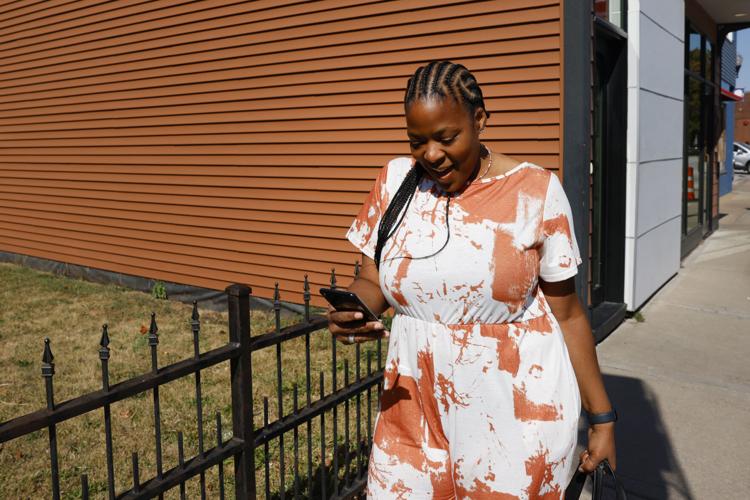
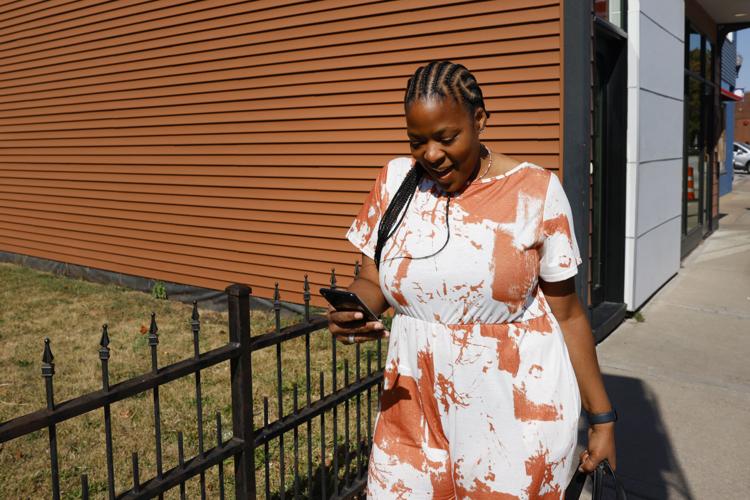
Influencer Alisha Hanes scrolls through her phone outside of The Brewed Book on Friday, Oct. 4, in Davenport.
Hanes participated in a campaign for the Coffee Trail, which allows customers to collect codes from various coffee shops in the Quad-Cities and redeem points and prizes. Before creating the video, she didn't even know it existed.
"I would not know that, if not inspired by Hummingbirds, and now I can share that with other people. The economy isn't the best right now, so getting a discount or getting something for free is actually a motivation to get out and enjoy things," she said.
From a business standpoint, Row said, Visit Quad Cities measured the success of the campaigns with metrics. Hummingbirds offers a platform for business owners to see how many views, comments and engagements each post receives.
"On the back end, we're able to see (statistics) per Bird, or per post, and (the Hummingbird) team will bundle all of that and do a post-campaign call to debrief things," she said. "We're seeing a lot of really great numbers, and I think overall, it's helping our social media strategy align with what we're doing."
With the help of Birds, Row said Visit Quad Cities sees an engagement rate double the amount they normally see. Row suspects the Birds being everyday people is a big reason the campaigns perform at such a high rate.
While some companies and brands will work only with content creators or influencers who have a certain number of followers, Hummingbirds are regular people in the community.
"The reason Hummingbirds is so successful, in my opinion, is the authenticity of things," Row said. "I think people are wising up to the tactics of influencer marketing, and a lot of folks are turned off by that in general. (Hummingbirds) is reverting back to word-of-mouth marketing, but with a modern twist."
Hanes signed up to be a Quad-Cities Hummingbird about a year ago after hearing about the company while at a local bar. Once she signed up, she was given her own link to let others know how they could join as well.
What drew her into the idea was getting to talk about brands and restaurants she loves locally, because she was afraid of them not succeeding. After seeing so many businesses close because of the pandemic, Hanes wanted to lend her hand to help keep them alive.
"I think marketing has changed so much. It's hard to get people to know what's out there unless you dig, and then on the other side, I hear from businesses it's hard for them to let people know it's out there because there's so much coming at you, and you're dependent on those algorithms," she said.
Algorithms pushing influencer content tend to come with a push to purchase products, Hanes said. What sets Hummingbirds apart is real people in the community are experiencing things and reporting back on how they felt.
Family-friendly activities can be difficult to find, especially when a family has a variety of ages to consider. Hanes said she tried to mention if places would be good for families, hoping to give consumers the information they needed instead of trying to sell a product.
At Visit Quad Cities, Row said, the majority of the campaigns they have commissioned are filled with comments from people engaging with the posts and were met with positive feedback.
Instagram is the most popular platform for Hummingbirds, Hanes said, and short-form videos are usually what companies are looking for. It allows the creator to show their vantage point and let the people make a decision for themselves instead of feeling they are being marketed to.
"Does it look cozy? Does it look like someplace I'd come sit down and do something at? Videos tend to (answer) that a little bit better than photos," she said.
Typically, Row said, Visit Quad Cities asks for content on Instagram, but Hummingbirds allows business owners to customize the campaign any way they want. Row said her organization was primarily leaning into short-form videos and carousel posts that grabbed attention quickly.
"We're definitely still leaning into the short-form content, but it's mutually beneficial because the Birds who do the content enjoy it," she said.
The sportswear industry is experiencing a significant shift, with women's influence on the rise. Although traditionally seen as menswear, brands are noticing that a large percentage of their male-targeted products are being purchased by women, with some competitors reporting as high as 70%. Roam, a brand with a decade-long history in menswear, has recognized this trend, with women making up 30% of their consumer base, actively engaging with the brand over the past year. This insight led to an expansion into women's offerings, which was met with an overwhelming and positive response from the market, disrupting size integrity expectations and highlighting the demand for quality sportswear designed for women. Roam differentiates itself in this crowded space by focusing on unique fabrications, marrying aesthetic with function, and emphasizing product quality. Beyond clothing, Roam positions itself as a wellness brand, aiming to inspire physical and mental health and fostering community through events. Their mission is to transcend the complexities of the wellness industry and provide an integrated experience that resonates with consumers' lifestyles.