


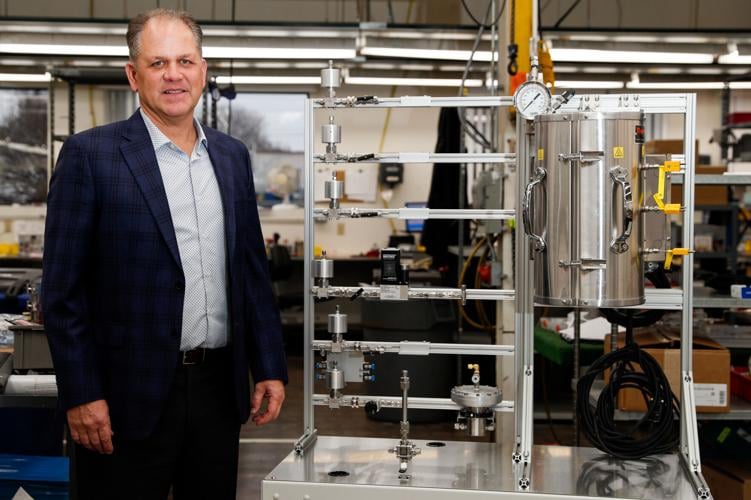
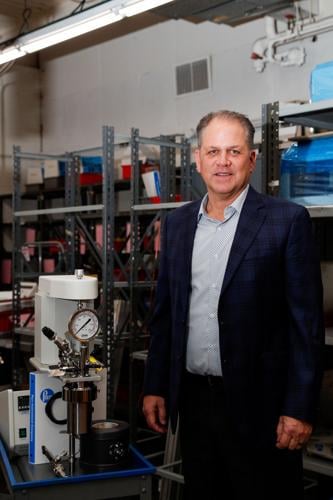



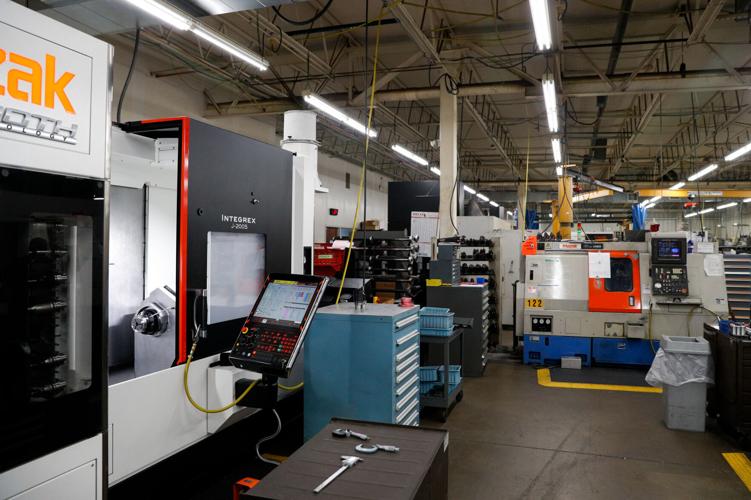


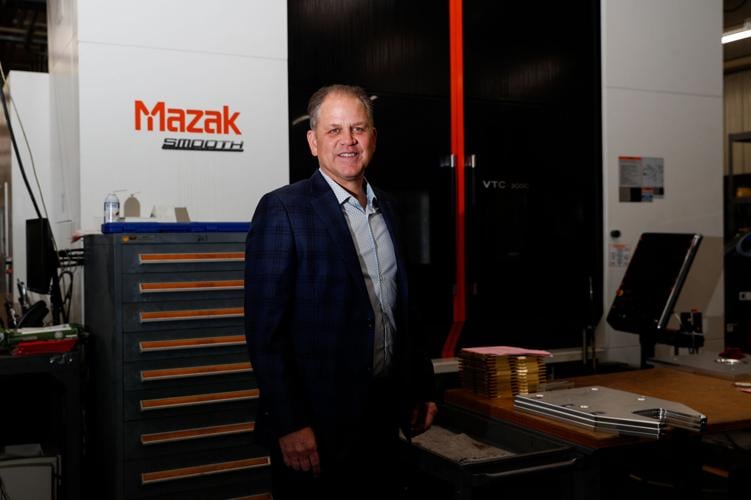
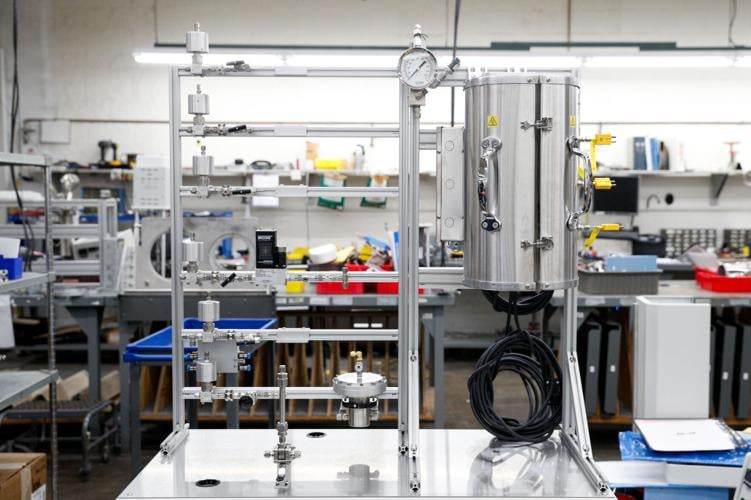
On one side of 53rd Street in Moline is a row of houses. On the other side is a long, red building, where engineers are building and designing millions of dollars worth of equipment every day.
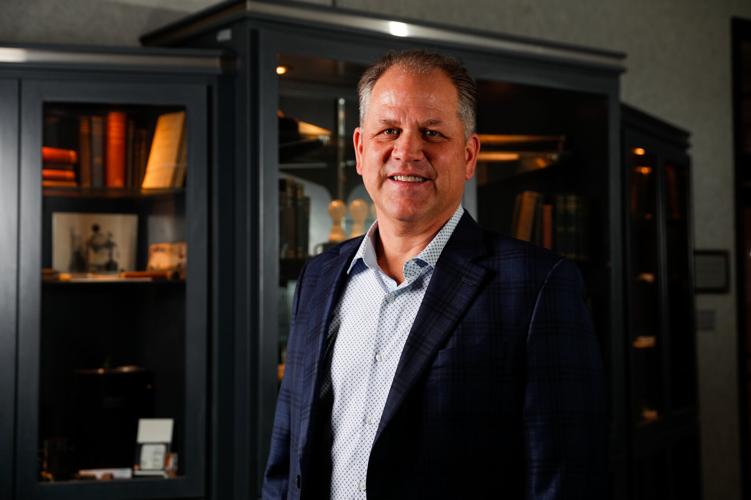
Parr Instrument Company has a rich, century-long history in Illinois, President and COO Jim Nelson said. It started with University of Illinois professor Samuel W. Parr opening the Standard Calorimeter Company in Champaign in 1899.
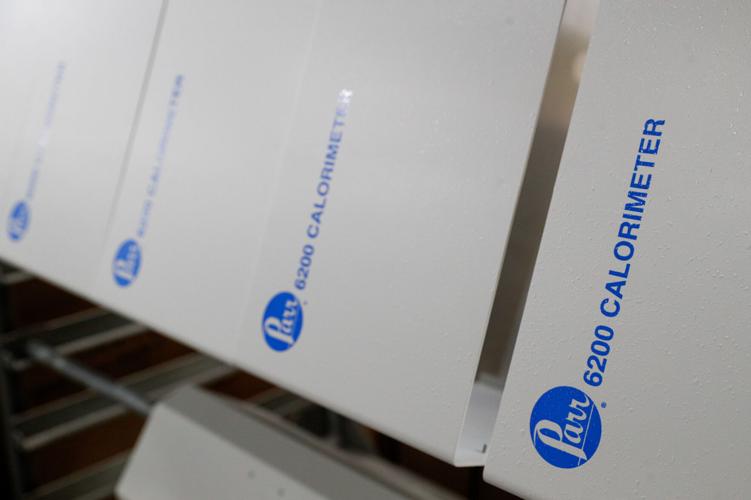
Parr developed a "calorie meter," now known as a calorimeter, while studying the heating value of coal. A calorimeter is a piece of equipment found in chemistry labs and used to measure the volume and heat produced by an object during a certain time frame. Today, about 30% of Parr's products are calorimeters.
In the 21st century, a common use is determining the number of calories in food products. At the turn of the 20th century, Parr used it to help determine if bituminous coal could be used for heat. He quickly encountered an issue: "Back then, Illinois mined a lot of coal, and it was high in sulfur content. It was corrosive to the metals that we were trying to test it in," Nelson said.
People are also reading…
To combat this problem, Parr developed the alloy Illium, named for the University of Illinois. It has powerful corrosion-resistant properties that made it a precursor to stainless steel, which was invented in the United Kingdom by a metallurgist in 1913. The calorimeters were then made out of the Illium.
In 1911, the company was moved to East Moline, then to Moline after World War I. In addition to the calorimeter business, the business had an alloy foundry, where the Illium was made.
The company joined with Madison-based C.F. Burgess Laboratories in 1927 to form the Burgess-Parr Company. This lasted until 1933, when Burgess split off to continue in the alloy business. The newly incorporated Parr Instrument Company remained in the calorimeter and laboratory-apparatus business with Harold L. Parr, son of the founder, as president.
During World War II, the company expanded its line to create high-precision machine parts, while still producing calorimeters and other laboratory equipment, as allowed by the the limited availability of critical raw materials. Following the war, the company introduced a new line of laboratory-pressure vessels and chemical reactors.
Today, Parr Instruments has 94 employees and in 2022 hit a record with $36 million in sales. This year, the company is on track to reach $38 million.
"It's a niche business, but we are known internationally for what we do," Nelson said. "We are in pharmaceutical, energy and of course chemistry [labs], which essentially touches everything."
At its peak, the company was exporting 60% of its products outside the United States. That number has fallen to about 50% now as the U.S. market gets stronger. Competition is another factor, depending on the product line, Nelson said.
In the case of calorimeters, which are of a standard design, countries such as Germany, India and China recently have emerged as competitors. Despite the copycat products, he said, Parr continues to dominate the U.S. market.
Customers range from industrial chemistry companies, like Exxon Mobile, to start-up businesses that are doing alternative energy research.
"In a typical year, we don't have one customer with 1% of the business. It's very diverse," he said.
Nelson credits Parr's reputation for the the broad range of customers, saying, "Our reputation is our best sales tool."
What brings customers to the business initially, though, is its ability to create exactly what the customer needs.
"Our strong point is custom equipment," he said. "Typically we can quote that, design it and build it faster than our competition can give them a quote."
Despite the sound reputation and century-long local tenure, Nelson said, the company has encountered setbacks.
"It's not always easy to find good, technical people in the Quad-Cities," he said. "We are not a hotbed for the chemistry industry."
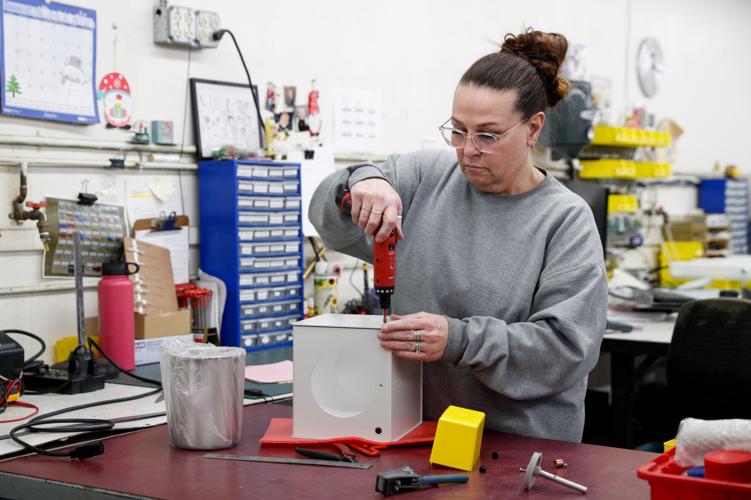
But that doesn't stop Parr. The sales staff is typically chemical engineers, who help customers find equipment that will help with their research. From there, the design team takes over, then passes the order off to the manufacturing team, which crafts the pieces.
Looking forward, Nelson said, the company is looking at expanding operations. Construction last was done in 1990, and the company has since grown, he said.
"We manufacture a high-quality product here in Moline," Nelson said. "We're proud to be made in the USA."