

Iowa began its history in the cigar-making business in 1856 with a small shop owned by Henry Gabriel in Burlington.
The shop was referred to as a “buckeye,” a term used before the Cuban Revolution to describe a small cigar factory, according to Cigar Aficionado. The term came from the factory’s use of tobacco from Ohio, the Buckeye State.

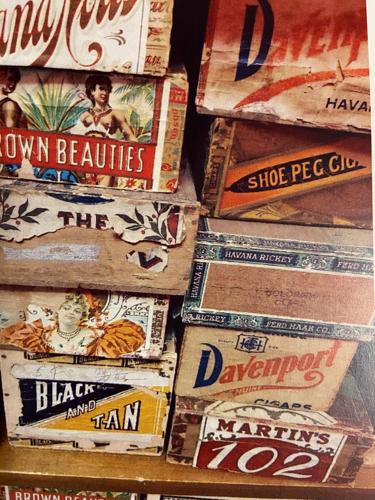
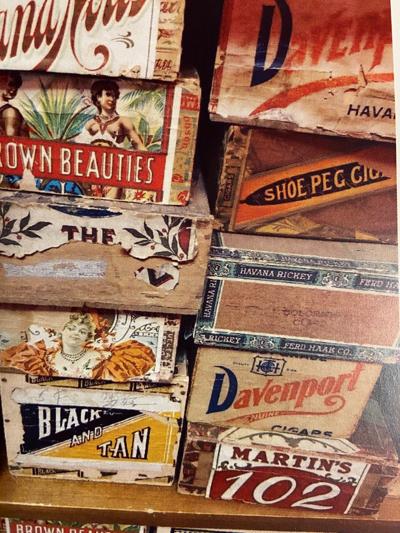
This photo from "A History of Cigars — Davenport, Iowa" shows some of Merle Vastine's cigar box collection. A reason cigar boxes stuck around for so long — many are 100 years old — is that they are sturdy and people kept them for storing items such as nuts and bolts, sales receipts or pencils.
Despite the small shop size, it was ranked 13th of 22 other industries in the state, according to research from the University of Iowa. At the same time, the western hemisphere of the state was beginning to take advantage of the growing industry as well.
By 1868, John W. Peregoy in Council Bluffs opened a shop. Between 1862 and 1876, nine more cigar manufacturers opened for business in Des Moines.
For the most part, the cigar manufacturing shops were short-lived, small, and only employed between five and 30 workers. But, others found success and eventually turned into factories, specifically in Davenport, according to the university.
People are also reading…
Nicholas Kuhnen, who started in Davenport in 1854, eventually expanded his business into one of the largest cigar factories in the state. By 1882, he employed nearly 300 women and men.

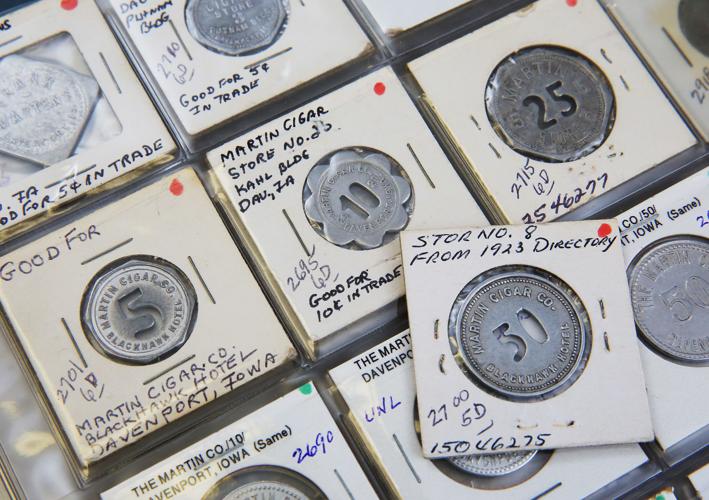
Tokens from the Martin Cigar Co., Davenport, are stamped with numerals in the middle.
Ferdinand Haak, a local competitor, opened a shop in 1869 and by the 1880s employed 60 workers and produced 2 million cigars annually, according to the book A History of Cigars in Davenport, Iowa by Tom Quinn and Merle Vastine.
D. D. Myers of Dubuque opened his business in 1869 and by 1880 upgraded into a three-story business building and a similar-sized factory.
Cigars got their start here before the Civil War with entrepreneurs — mostly German immigrants — bringing tobacco in by rail in bales, boxes, and barrels from southern Illinois, Wisconsin and Kentucky.

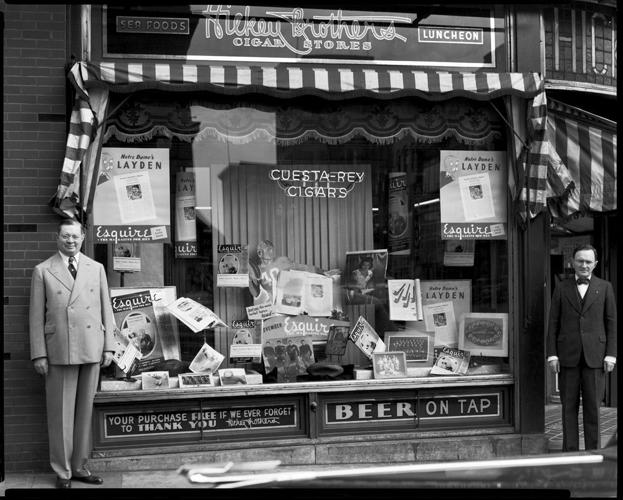
William Hickey (left) and Dennis Hicley, Jr. at Hickley Brothers Cigar Store, 201 Brady Street, Davenport, circa 1920s.
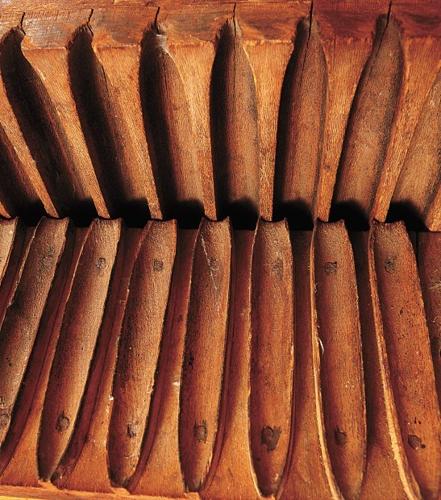
Once here, the big leaves were torn into strips that were wrapped around other pieces of tobacco and placed moist into molds that were pressed and dried to give the cigar its uniform shape. The cigars were then packed into colorful boxes and shipped across the country. The early boxes were wood, usually covered in paper with lithograph pictures, along with the manufacturer’s name.
From 1861 through 1960, Davenport saw about 240 cigar manufacturers come and go, some small and lasting only a year or two, some large, lasting more than 50 years. At one time, Davenport was a cigar capital of the Midwest.
At its high-water mark in 1910, there were 34 manufacturers easily employing more than 1,000 people in total. The heyday in Davenport was from 1900 through the mid-1920s. In 1902, for example, the city had 60 cigar factories.
Two of the best-known manufacturers in the city were the Ferd. Haak company, located in what is now Tri-City Equipment, a big red stone building at 527 W. 4th St., and the Peter N. Jacobsen Cigar Co., located in a building at the southwest corner of 4th and Harrison streets, that now houses H&R Block and the public defender’s office.
In 1925, the Peter N. Jacobsen Cigar Co., one of the bigger establishments, made 250,000 cigars per week, employing about 250 workers.

Another manufacturer whose building still stands was M. Raphael & Sons, most recently known as Raphael’s Emporium Antiques, 628 Harrison St. By 1945, there were just two cigar manufacturers left in Davenport, and the last one, F.C. Gremmel Co. at 908 W. 2nd St., closed in 1961.
Alma Gaul contributed to this report.
Iowa Barn Foundation annual barn tour showcases unusual, historic barns
frost barn waterloo .jpg
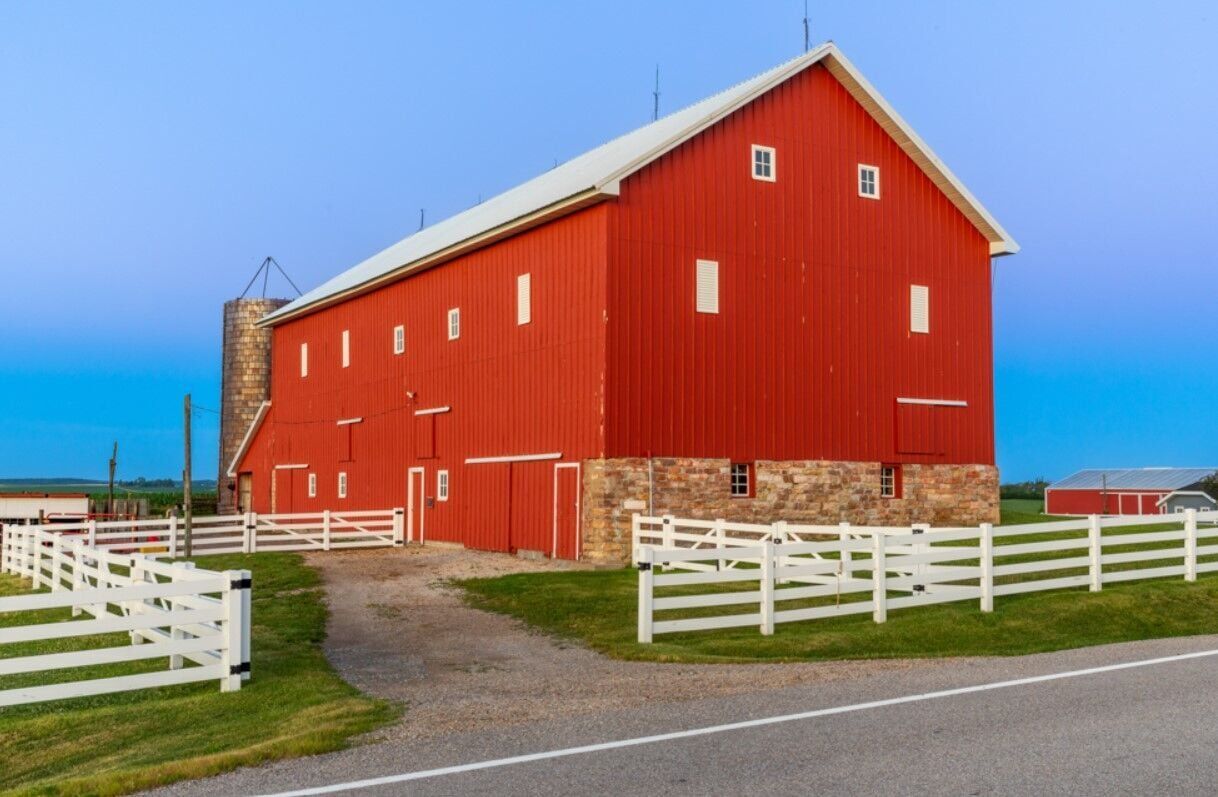
Frost Barn, Waterloo.
Barn was built approximately in 1877 and was renovated by owner in 2018. Original use was horses and milk cows, but the barn now houses sheep. The walls are three-foot thick limestone at the base.
frost barn 2 waterloo .jpg

Frost Barn, Waterloo
frost barn 3 waterloo .jpg

Frost Barn, Waterloo
frost barn 4 waterloo .jpg

Frost Barn
hayward barn 4 .jpg

Hayward Barn, Dysart
Owner’s great-grandfather, Charles Hayward, purchased the farm in 1881. The barn was built in 1916 and is 66 feet in diameter. It may have been constructed by Johnston Brothers Clay Works, Ft. Dodge because of size of clay bricks used.
hayward barn 6 .jpg

Hayward Round Barn, Dysart
hayward barn 5 .jpg

Hayward Barn, Dysart
miller barn 3 .jpg

Miller Barn, Waverly
This barn was built in 1914 by W.H Miller and his brother, Gilbert, and constructed with grown cedar and native oak trees on their land. The barn was equipped with porcelain cattle waterers. The Miller Guernsey Dairy was one of over 20 dairies in Bremer County from 1920 to 1940. The Miller dairy helped supply the local Carnation Company with milk for condensed milk.
miller barn 2.jpg

Miller Barn, Waverly
koschmeder wooden silo 1 .jpg

Koschmeder Wooden Silo, Readlyn
The wooden silo, constructed in 1939, was made by The Independent Silo Company in St. Paul, Minnesota. The “Triple Wall Silo” was extremely durable and frost resistant. The inner wall is 2×6 heart stock Redwood staves, tongue and grooved and beveled to conform to the curve of the silo. The middle wall is a heavy waterproof silafelt layer. The outer wall is heart stock Redwood siding with special end-lock joint. The silo is one of the last free standing wooden silos in Iowa, and the owners gave it a new metal roof and a fresh coat of paint in 2022 to ensure it will stand for years to come. (Award of Distinction)
koschmeder wooden silo 5 .jpg

Koschmeder Wooden Silo, Readlyn
koschmeder wooden silo 4 .jpg

koschmeder wooden silo 2 .jpg

Koschmeder Wooden Silo, Readlyn
secrest octagonal barn .jpg

Secrest Octagonal Barn, West Liberty
There is no barn like this anywhere in the world. It has an 8-sided bell-shaped roof with laminated ribs, held together in part with square nails. Joshua and Esther Secrest were early successful Iowa farmers with 520 acres of land in Johnson County. George Frank Longerbeam was the carpenter, living in nearby Downey. The upper level has storage for 200 tons of loose hay. The middle level was used for unloading hay with fork and rope, storage rooms, wooden tracks to download hay from top floor and move on rail car to attached cattle-feeding-shed. The lower level held 32 horses and 16 dairy cows. Four shafts from the upper floor provided openings to drop down feed for the horses and cows below (Award of Distinction).
secrest octagonal barn 2 .jpg

Secrest Octagonal Barn, West Liberty
secrest octagonal barn 3 .jpg

Secrest Octagonal Barn, West Liberty