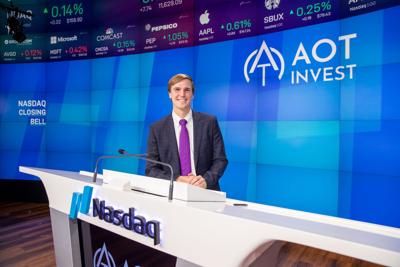


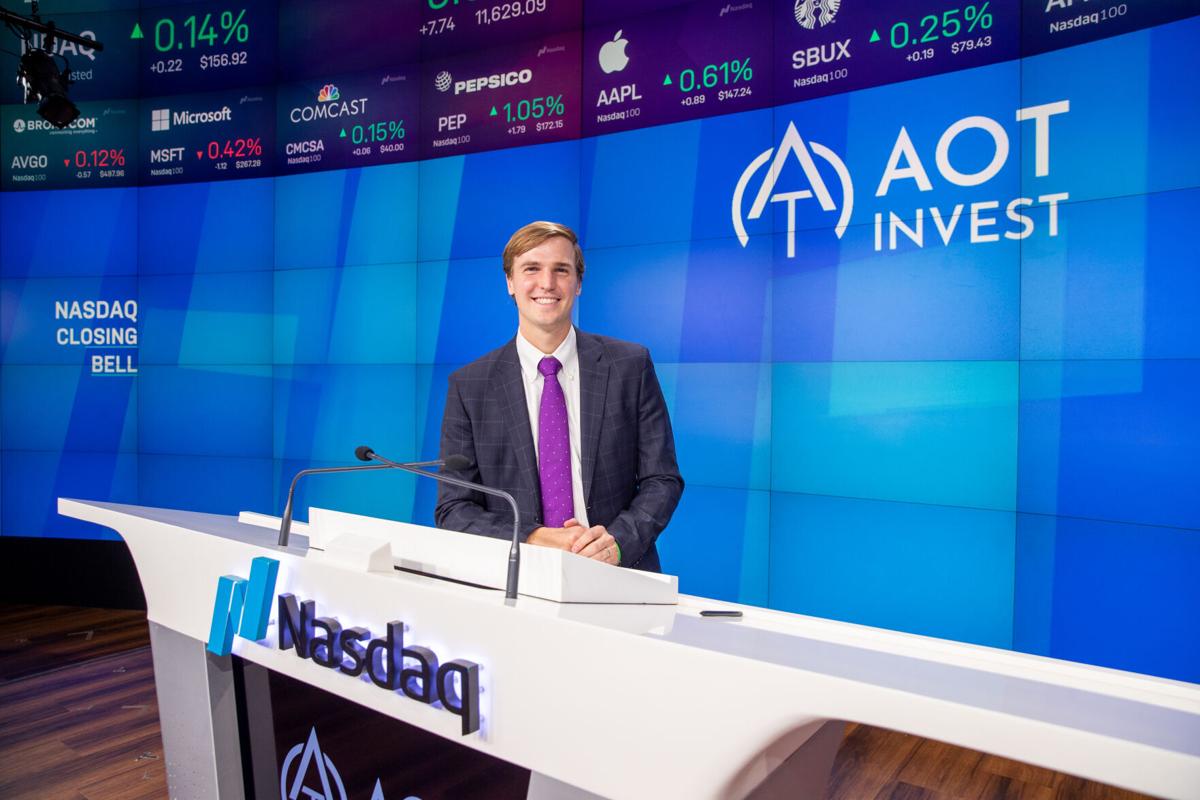
For John Tinsman, finance runs in the family.
“I started trading and investing in stocks in college," the 28-year-old entrepreneur said.
The Tinsman name is one most Quad-Citians will recognize from Twin State Technical Services. Founder Beth Tinsman started the technology firm in 1992 following a decade long career at IBM. Following his college career where he studied economics at Northwestern University and the University of Oxford, Tinsman worked for the family firm.
But, it was not long before he took his talents to Chicago. After a few years of living in the Windy City, Tinsman and his wife made the decision to move back to the Quad-Cities so the pair could raise their family. Tinsman went back to work at Twin State, but soon decided to branch out on his own.
"That eventually lead to AOT Invest," he said.
People are also reading…
Tinsman makes it on the market
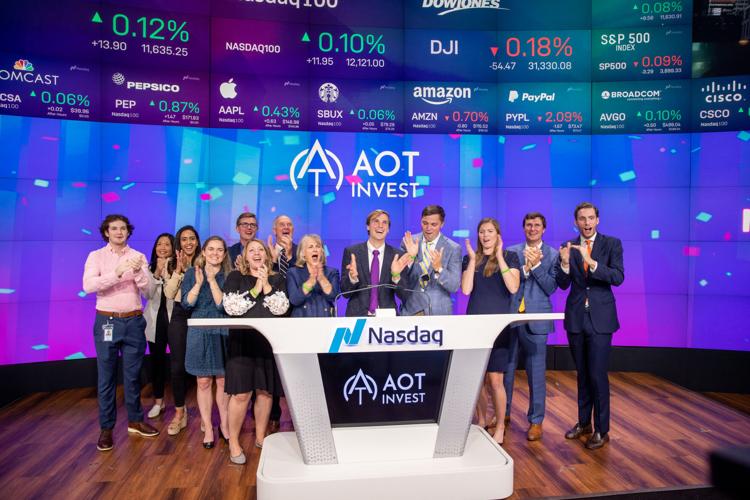
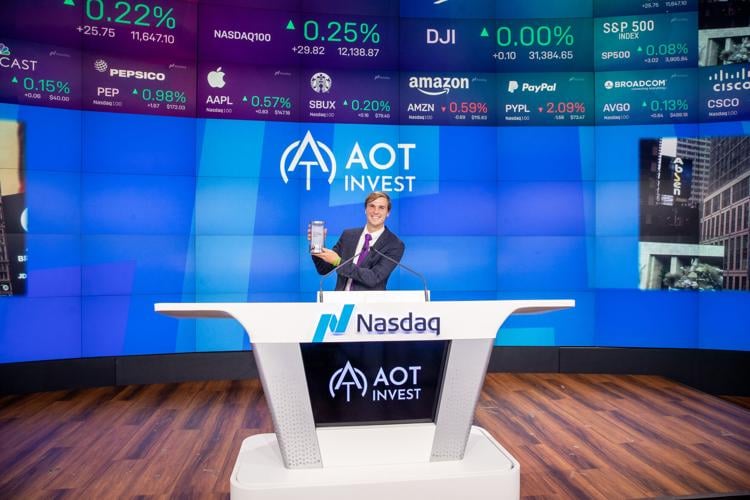
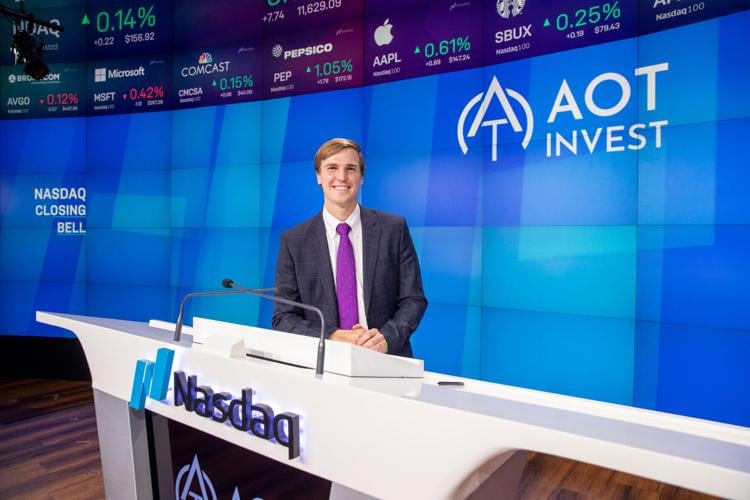
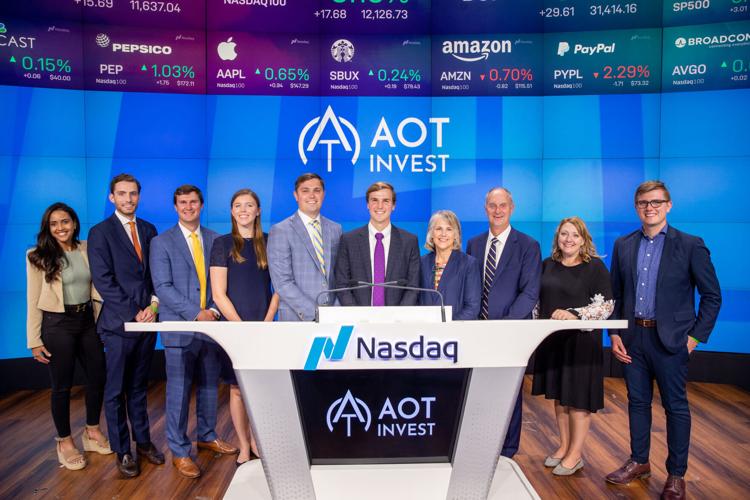
John Tinsman, founder of AOT Invest, of the Quad-Cities, rings the closing bell of the Nasdaq on Friday, June 8, to close out trading for the week.
AOT Invest is described on its website as a, "high quality growth portfolio embracing low marginal cost companies" and is considered an ETF- an exchange traded fund. While stocks are shares of a specific company, ETFs work as a bundle of shares from multiple companies. AOTG is a trust where people buy shares hand-selected by Tinsman.
"It's a very unique investment strategy, and it was really nice to be able to come back to the Quad-Cities to do that," he said. "It's really good for investors because there's a lot of tax efficiency."
The advantage to investing in an ETF vs a stocks, are that ETFs tend to be less volatile. Stocks are a high-risk investment where high-reward is the payout if things go right. However, high-loss is also a possibility.
According to e-trade, ETFs invest in many diverse companies at once. This means that one poor performing stock can potentially be offset by other, better performing stocks within the fund.
On the AOT website, this strategy is highlighted, reading, "AOT targets industries projected to grow significantly over the next 5 to 10 years. Within those industries, AOT seeks to invest in innovative market leaders who are growing their revenues or earnings and whose products or services could be described as having low marginal cost qualities."
By having a lower marginal cost, the company can potentially sell it for much more than it spent to produce the good or service. In turn, this significantly raises the profit on the new sale.
Tinsman struck it big this summer when the stock symbol AOTG was born and his Quad-City company became traded on the Nasdaq. To apply, he had to comply with a number of background, security and safety checks in order to be vetted by authorities. "It's a very complicated process," he said.
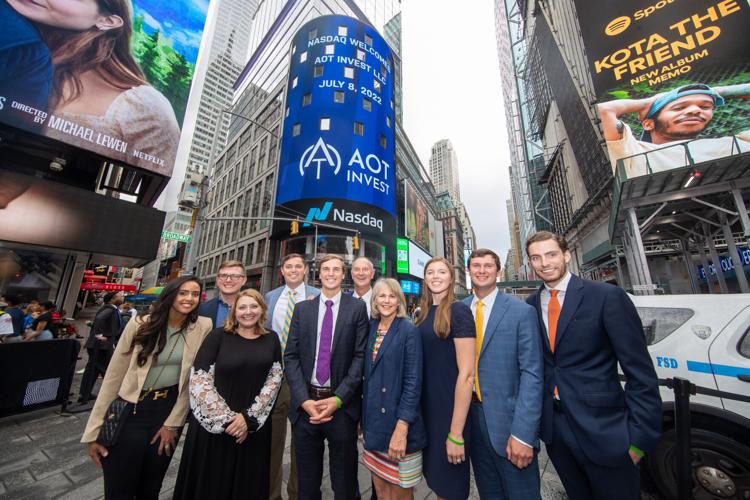
On June 8, Tinsman was invited to ring the closing bell of the Nasdaq to close out trading for the week. According to the Nasdaq website, participating companies receive one hour of advertising on the Nasdaq Tower and Marquee.
The ceremony takes place in the CNBC studio in New York City, which Tinsman called an incredible experience. Being able to bring along his family, the first investors in his company, only added to the experience.
"To be there and ring the bell and overlook Times Square ... It was such a fun experience and the Nasdaq team is very professional," he said.
The Nasdaq was founded in 1971 as a subsidiary of the Financial Industry Regulatory Authority (FINRA), according to Investopodia. At the time, it was known as the National Association of Securities Dealers (NASDQ). In 2000, it began a restructuring process and sold shares in the electronic exchange to its members. Those shares began trading in 2002 under the symbol NDAQ.
Now, the Nasdaq- National Association of Securities Dealers Automated Quotations- is home to more than 3,700 companies. Known as a dealer's market, those on the Nasdaq trade through a dealer- not directly with each other. The New York Stock Exchange, however, is an auction market, where participants trade directly with one another on an auction basis.
Even more restricted is the Nasdaq-100, which tracks the gains of the top 100 non-financial companies on the exchange. The companies tracked by the Nasdaq 100 index include more than 90% of the market capitalization of the Nasdaq Composite index, according to Forbes.
The weighting of companies included in the Nasdaq-100 is re-balanced once a quarter. Companies that no longer meet the Nasdaq-100’s rules for inclusion are replaced with new firms once a year in the third week of December.
While each are their own exclusive club, the Nasdaq is known for supporting technological and innovative ideas. But, breaking in as not easy. According to Invest.net, the requirements include:
- Shareholders Equity of at least $2,000,000
- At least 100,000 shares of public float
- A minimum of 300+ shareholders
- Total assets of $4,000,000
- At least two market makers
- $3 minimum bid price of the company stock
- Public float market value of $1,000,000
According to the Nasdaq website, the market is best-known to the younger generation because of its popularity with companies like Amazon, Google and Apple. The market capitalization of these large companies is larger than that of the entire Tokyo Stock Exchange.The index’s total market capitalization is much larger than that of the entire Tokyo Stock Exchange, making it the world’s second-largest market after the New York Stock Exchange.
With that in mind, being in the studio was an honor, Tinsman said. It not only raised his business profile, but gave him a confidence boost.
Being a young entrepreneur does not come without its challenges. Some people may think Tinsman is too young to be trusted with large amounts of money, but the CEO has another perspective.
"You can look at some of the most successful companies ever: Apple, Amazon, Mircosoft. Their CEOs were 22," he said. "I don't think age is a barrier in this industry as long as you're willing to think big."