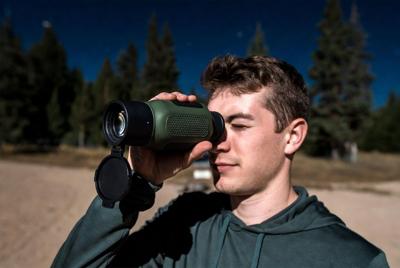



Many outdoor users choose digital night vision monoculars because they are compact, easy to carry, and practical for quick checks after dark. A monocular does not take up much space, but it can still help with trail viewing, campsite awareness, property inspection, and general nighttime observation. For people who do not want to carry full-size binoculars or a heavier optic, that portability is often the main reason to buy one.
Why a monocular is useful in the field
A monocular is built around convenience. It can fit in a backpack, vehicle, gear pouch, or jacket pocket, depending on the model. That makes it easier to keep nearby instead of leaving it at home. The best optic is often the one you actually carry, and a compact night vision device has a better chance of being used when it is needed.
People are also reading…
Digital night vision works differently from traditional tube-based night vision. It uses an electronic sensor and a small display to create the image. Many digital models can work in both daytime and nighttime settings, and some include photo or video recording. That can be helpful if you want to document wildlife, inspect a dark area, or review something later instead of relying only on memory.
The learning curve is usually manageable. Most users can raise the device, focus the image, adjust brightness, and begin scanning without a complicated setup. That makes digital monoculars appealing for campers, hikers, landowners, boaters, and people who simply want a practical way to see more after sunset.
Best uses and realistic limits
Digital monoculars are well suited for short and medium-range viewing. They can help you check movement near a fence, look across a yard, scan a trail, identify a structure in low light, or observe animals from a safe distance. They are also useful for quick inspections when carrying larger gear would feel unnecessary.
There are limits, and buyers should understand them. In very dark areas, many digital night vision devices rely on infrared illumination. Infrared light can improve visibility, but range and image quality depend on the strength of the illuminator, weather, background conditions, and the distance to the target. Heavy brush, rain, fog, or reflective surfaces can also affect the image.
Screen brightness is another factor. A bright display can make the image easier to see, but it can also affect your natural night vision if you use it for long stretches. It is worth adjusting brightness to the lowest comfortable level. Battery life also deserves attention. A compact device is only useful if it is charged and ready. Keeping spare batteries, a power bank, or a charging cable with your gear can prevent frustration.
Ergonomics matter, too. A good monocular should be easy to hold steady with one hand, and the controls should be simple enough to use in darkness. If you need to remove gloves or look down every time you change a setting, the device may become annoying during real use.
Conclusion
Digital night vision monoculars are practical for people who want nighttime visibility without bulky equipment. They are not perfect for every situation, and they may not replace advanced binocular or thermal systems. Still, they offer a useful mix of size, function, and convenience. For camping, scouting, property checks, and casual observation, a compact monocular can be the piece of gear that makes night viewing simple enough to use often.