





Editor's Note: This story first appeared in the March edition of Insight magazine, which offers in-depth insights into the Quad-Cities business landscape.
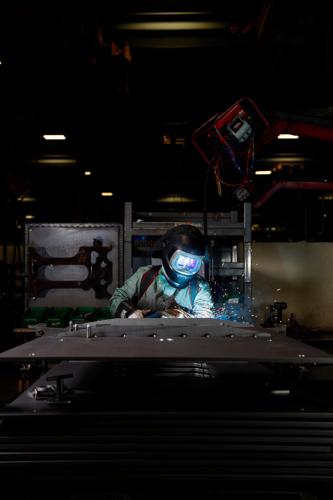
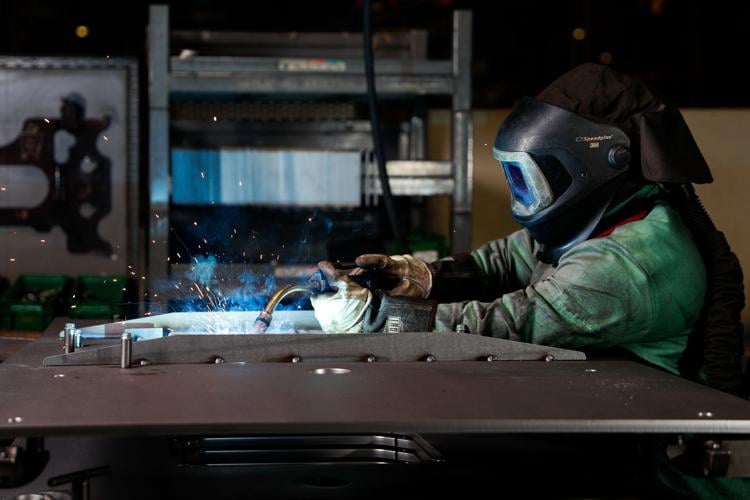
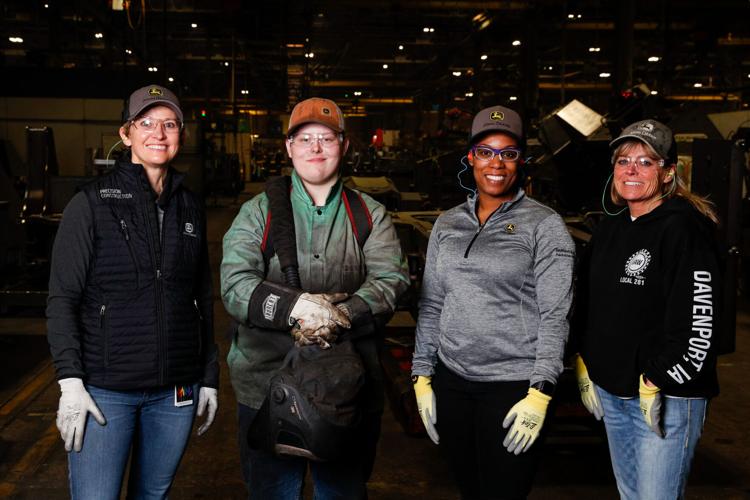
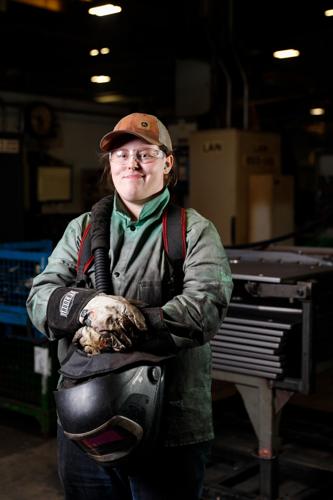
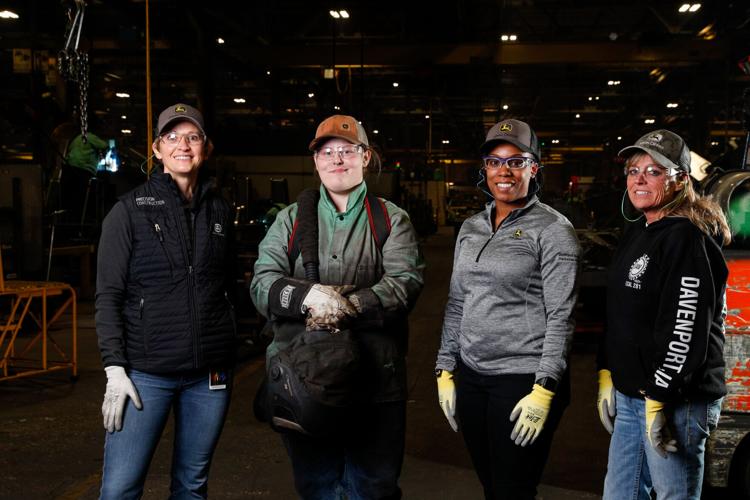
At 19, Abigail Parsons already is working full time as a welder at John Deere, and she's one of few women to do so.
The summer before her senior year of high school, Parsons started a welding apprenticeship program, working 40 hours a week in addition to studying. In school, she took every "garage" class she could find. The apprenticeship offered her duel enrollment with Scott Community College, where she could earn credits toward a degree.
"That program allowed me to spend more of my time during the school day in the garage, welding," she said.
The program led her to John Deere Davenport Works, where she began as a welder.
People are also reading…
"Once I was near the end of my apprenticeship, they offered me a job, and I signed on right after," she said. "I went from working down there in the factory to getting trained in Harvester."
Parsons said she never liked school and was not a good student. Graduating and landing the apprenticeship and the eventual job was more than she thought she could accomplish.
"Without the apprenticeship, I would have dropped out of high school," she said. "I am the first person in my immediate family to even graduate."
But that wasn't the only barrier she had to cross.
"In almost any garage classroom throughout my high school career, there was maybe one other girl, but most of the time I was the only one," she said.
Only one other girl was in her high school's vocational program. When she got to Deere, the only other woman dropped out of the program early.
"It's hard sometimes. You have to fit in with the guys ... but they kind of look at you like you're not supposed to be there," she said. "They look at you and go, 'Well, we're going to have to fix stuff there.' "
Parsons had been through this treatment before. In high school, the guys in her class would make comments. However, her work proved her worth.
"The instructor would say, 'Pick on her all you want. She has better welds than all of you,'" she said.
According to the Universal Technical Institute, only 3.8% of welders in 2020 were women. According to the Department of Commerce, women make up 30% of the manufacturing workforce. Of them, 1 in 4 managers is a woman.
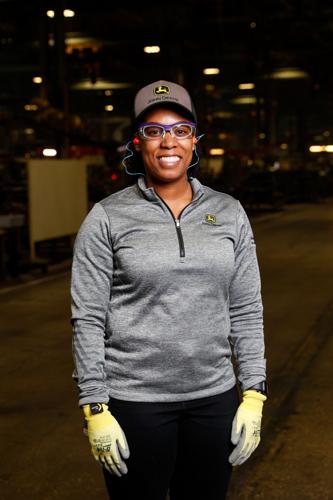
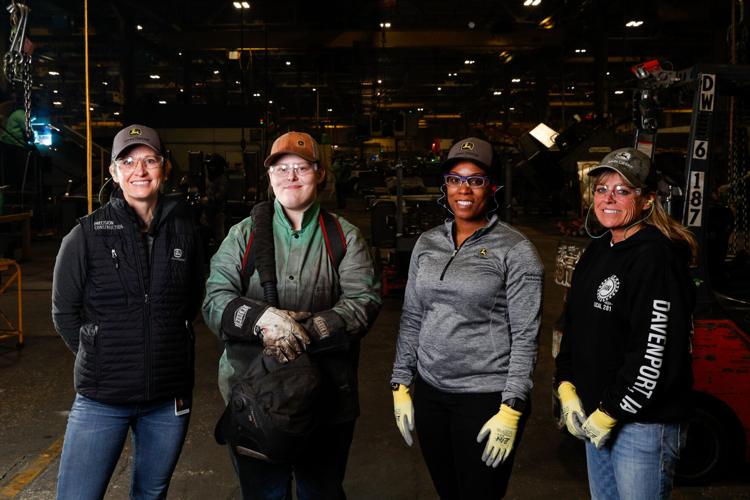
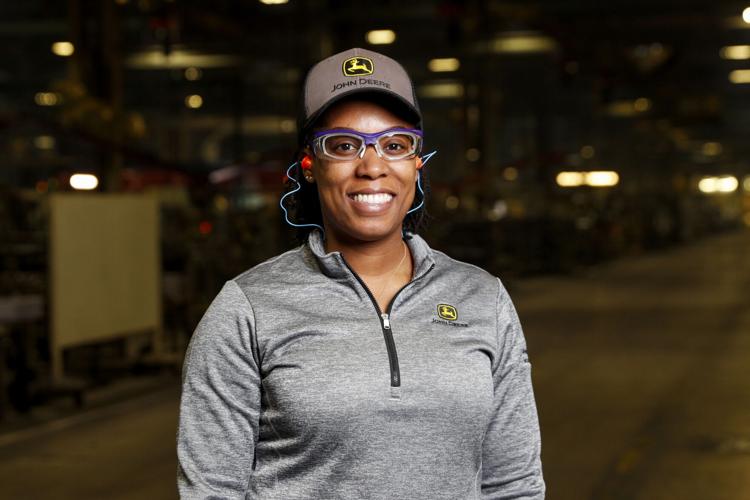
Rochelle Deshazer, a fabrication manufacturing engineering supervisor, has a story similar to Parsons'. She also completed multiple internships after high school and now has progressed to being an engineering supervisor in the welding department.
"You can't go wrong working for Deere, but I didn't have my sights set on a specific career," she said.
The Rock Island native has an industrial engineering background but slowly gravitated toward the manufacturing field. In her role, she also has had to face misconceptions about women in her field, but most of them are short-lived, she said.
"When you demonstrate what you can do, it doesn't take long to get past those perceptions," she said.
Factory manager Mary Pat Tubb reflected that sentiment, saying the statistics and nature of the job play into why people are generally surprised to see women working in manufacturing.
"When you walk into a group, people have a certain perception of what you're going to be good at and what you're not," she said. "I think that's a thing to overcome, but I have been here 25 years, and I have a really solid reputation."
When she accepted the supervisory position, her trainer asked what she thought would be her greatest obstacle. Tubb assumed it would be her age, but the trainer told her it would be the fast-paced atmosphere and having to make decisions all day long.
"As far as working with a bunch of guys on the floor, it took two days and they didn't care," she said. "Some of those guys are my biggest advocates today."
Being respected by peers can pay off in a big way. Lynn Crosair knows this well.
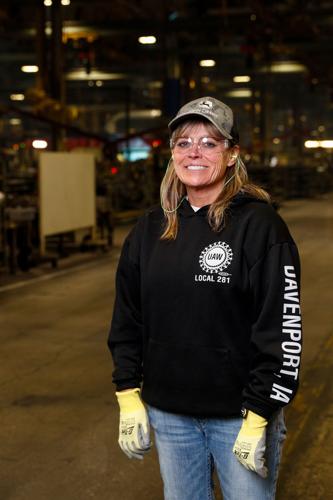
Since starting at Deere in 2005 as an assembler, she has worked her way up the ranks and was elected as a UAW committee person in 2016. In her role as a liaison, she works with contracts, paperwork and advocates for teams within the factory.
"I like to help people, and when I notice people are out working and asking questions but don't get answers, I like to help," she said. "I want them to know there's someone they can talk to if they need to."
But it wasn't always that way. Crosair said when she first started, it was rough. She fielded many comments from male co-workers who didn't think she could keep up. However, the challenge of proving herself is what motivated her to succeed.
"All I kept thinking was, I had to show them," she said.
Flash forward to 2023 and that sentiment still is felt by Parsons. Watching other women go through the apprenticeship programs as she did with welding encourages her to remain in her role and continue paving the way for future generations.
"The more years we stay on, the more years we prove we can do this," she said. "And we can do it better most of the time."