











The recent announcement of $1.2 billion for Corn Belt Ports and $829 million for improvements to locks and dams along the upper Mississippi River from the recently passed federal infrastructure package is being celebrated in the agriculture and river commerce community. The improvements will translate into time and money saved for farmers and businesses that use the river to transport their goods.
The funds were awarded out of the Infrastructure Investment and Jobs Act, signed into law by President Biden in November. The economic impact from the improvements will benefit ports up and down the river.
"When you add all of that up, it really is a pretty significant investment in the region," said Robert Sinkler, Riverside Global CEO and water resource infrastructure director for TransPORT. "We're really happy because this is the first major federal investment that we've attracted since the ports were formed in late 2020 and 2021. We see it as a huge success story for us; we're pretty excited about the infrastructure bill.
People are also reading…
"The creation of the corn belt ports has resulted in us having more national and global visibility on the value of water-borne commerce in the United State's major grain growing region," he said. "That by itself is significant."
Most of the $829 million earmarked for lock and dams will go toward the Navigation and Ecosystem Sustainability Program (NESP) on the Upper Mississippi River System, focusing on the modernization of Lock & Dam 25, near St. Louis and an environmental restoration project at Lock & Dam 22 that includes construction of a fish passage at a cost of $97 million.
The projects will be coordinated by the Rock Island District, which encompasses portions of Minnesota, Wisconsin, Iowa, Illinois and south into Missouri and includes 12 locks and dams along the Mississippi River. There are plans to eventually improve all locks and dams on the river.
"The NESP program has been waiting a very, very long for this funding since its authorization in 2007," said Tracy Zea, president and CEO of the Waterways Council. "What the money will do is modernize the lock facility at Lock & Dam 25 by adding a 1,200-foot chamber which will increase reliability and efficiency.
"Right now, there is only one lock chamber at Lock & Dam 25. So if that chamber goes down, we shut down the whole Mississippi River and commerce moving north and south."
The locks and dams were built in the 1930s to accommodate steamboats that would pass through 600-foot-long locks. Because modern barges are 1,200 feet long, they must uncouple and move separate portions of the barge through one at a time and be reattached on the other side.
The process is time consuming, costly and dangerous for maritime employees who must physically assist in the process.
"When you decouple the barges, it takes two to three hours at each lock and dam facility to do that," Zea said. "Now, with a 1,200-foot chamber, it will take only 45 minutes. That is the efficiency gain."
Sinkler said expanding lock chambers to 1,200 feet will be game changing for the agriculture industry.
"It is going to enable our exports to move quickly to our biggest trading partner, which is the port in Louisiana," he said. "This is just the beginning. After Lock & Dam 25, there will be more of those to follow. It builds confidence in the region; the ports are economic development activity and people know now that we are improving infrastructure to align with projected growth."
Infrastructure upgrades have been requested for decades
The infrastructure improvements are long overdue; the funding is the largest investment in locks and dams on the upper Mississippi River in nearly a century. Zea said it has been an uphill battle, but that it's exciting to finally have the funding to move forward.
"You don't need an engineering degree to know that the locks and dams have been for many, many years, in desperate need of updating and repair," said U.S. Rep. Cheri Bustos, D-Moline. "We have this infrastructure along the Mississippi River that was built for steamboats, not for these huge barges that are used today."
Bustos said locks and dams that have served agricultural commerce for that past 90 years are "not up to the task anymore."
"You think about the time it takes to pull those (barges) apart, lock through half of it, and then have to do that a second time — every time they're going through a lock and dam," she said. "It's inefficient; it's costing our farmers and others who use the river to transport their goods. It costs them a lot of money."
Now in her fifth term, Bustos said she has worked with three different U.S. presidents and administrations in efforts to improve locks and dams along the Mississippi River.
"This is the biggest investment that we've seen since the system was built almost a century ago," she said.
"The bottom line is, this investment will grow our economy. It will spur job creation, it will make our nation more competitive, it will help our climate by reducing transportation emissions and it's going to ensure that America's farmers can bring their goods to market faster and more efficiently. It is a win-win for our entire nation."
Bobby Frederick, senior vice president of legislative affairs for the National Grain and Feed Association, said using rivers as transportation is critical to exporting goods.
"From a grain handler and grain manufacturer perspective, we use the highway system, the railways and we use our waterways," Frederick said. "If we didn't have the waterways, it would take about 1,000 more trucks on the highway to ship the same amount of grain that one full barge tow can do. That's a lot more wear and tear on our highways and it's more emissions. Without the waterways, the rail rates would go sky high."
Frederick said 70% of agriculture exports since 2019 have been moved using rivers, 30% of which were corn and soybeans.
"More than half of that goes through the Mississippi River," he said. "When it comes to the farmers, that's 20% of their income. Just imagine if 20% of your income wasn't available anymore because we didn't have agriculture exports. That's why it's so important that we have these 1,200-foot chambers."
Zea said there will be no to minimal delays during construction of the new chamber at Lock & Dam 25 since it will be built next to the existing 600-foot lock. The new lock will be operational in five to six years.
Short locks pose safety risks
Although water infrastructure improvements will save time and money, lengthening locks will also improve safety for barge workers. There are risks mariners take when decoupling barges into smaller sections in order to pass them through locks.
"Every time you decouple a barge, a mariner has to be out on the barge, untying and tying up the barge, which is a dangerous job," Zea said.
"Of all the efficiencies we’re going to gain, I point out the safety to our professional mariners," said Martin Hettel, vice president of government affairs for American Commercial Barge Line and a member of the board of directors of the Waterways Council. "To not have to break that tow in half, in these conditions we’re facing today, every time we put a deck crew on tow we put them at risk of injury. Having a 1,200-foot chamber to slide in and slide out, is just going to make that much more safe."
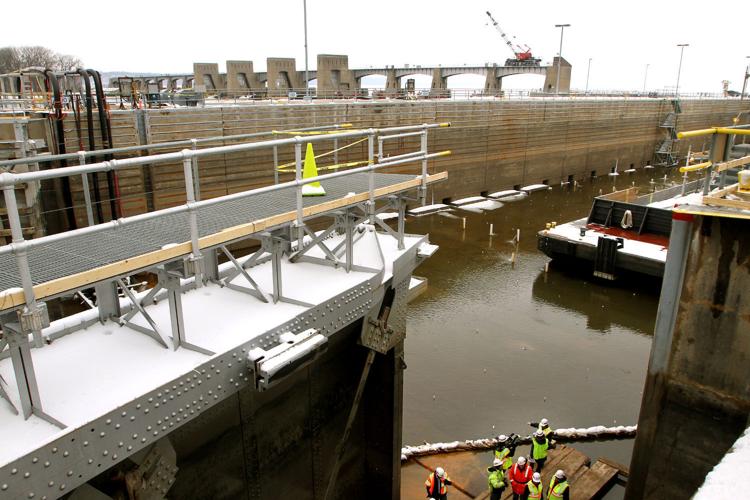
Aaron Dunlop, river operations manager for the U.S. Army Corps of Engineers at Lock & Dam 15, said recoupling a barge means that wires, lashings and ratchets must also be reattached.
"That's the dangerous part; things start coming apart if they don't get it together," Dunlop said. "Maybe the communication isn't perfect and people can be hurt very badly during that. We can completely eliminate that whole process with 1,200-foot chambers."
"And the most dangerous thing is stopping that cut with 16,000 tons with a 2-inch lock line at the end of that lock rope when it's pulled out," Hettel said. "That's the most dangerous thing their deck crew does."
Dunlop said the complicated task of uncoupling and recoupling a barge poses risks to everyone involved.
"When they built these (locks) almost 100 years ago, how could they envision what we're dealing with today?" he said.
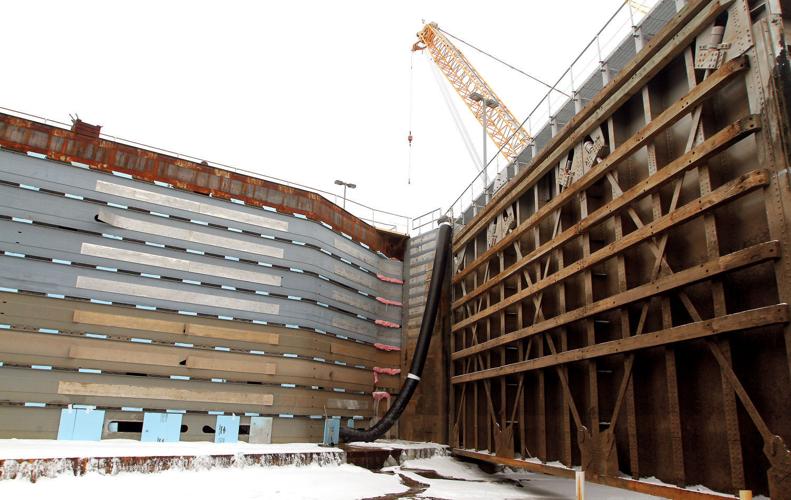
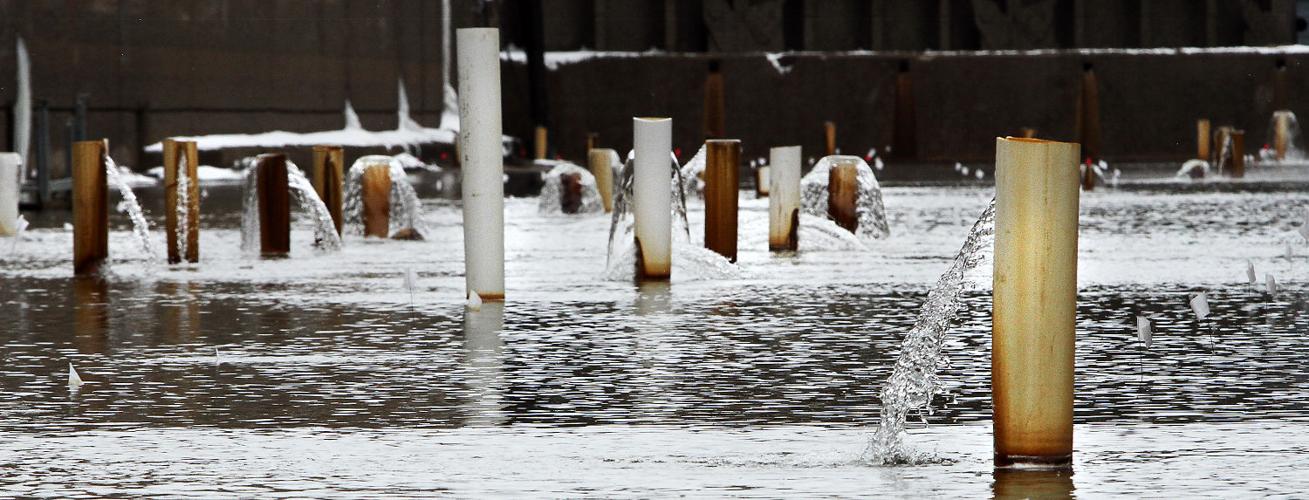
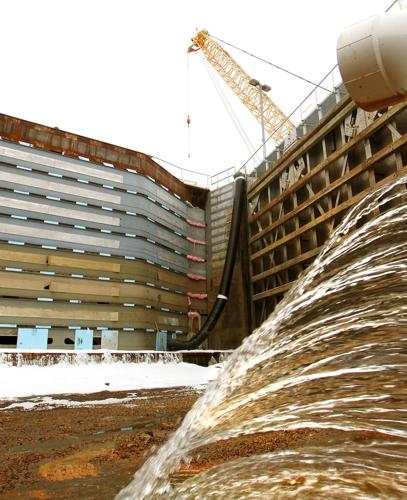
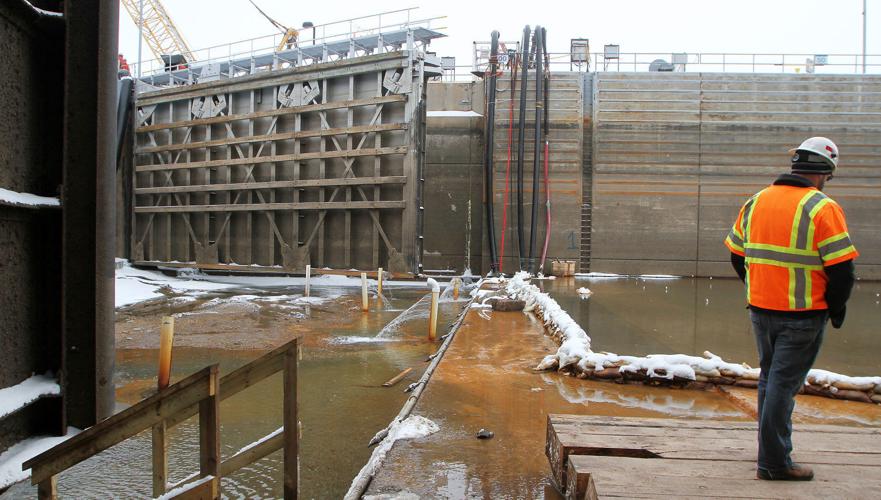
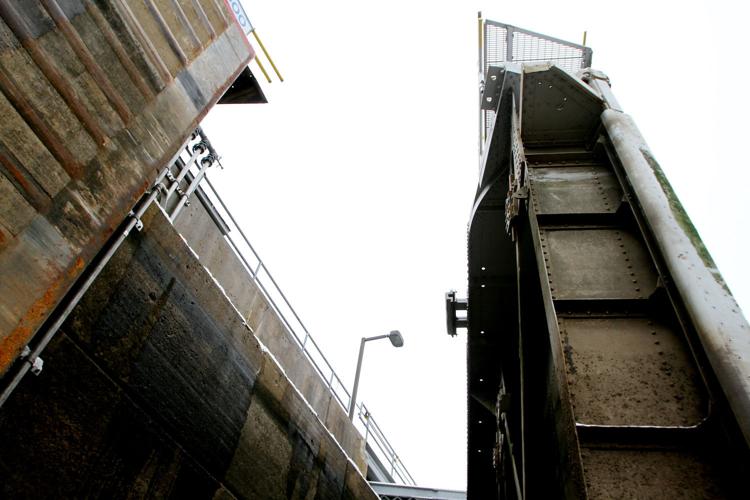
Dewatered lock shows signs of damage and decay
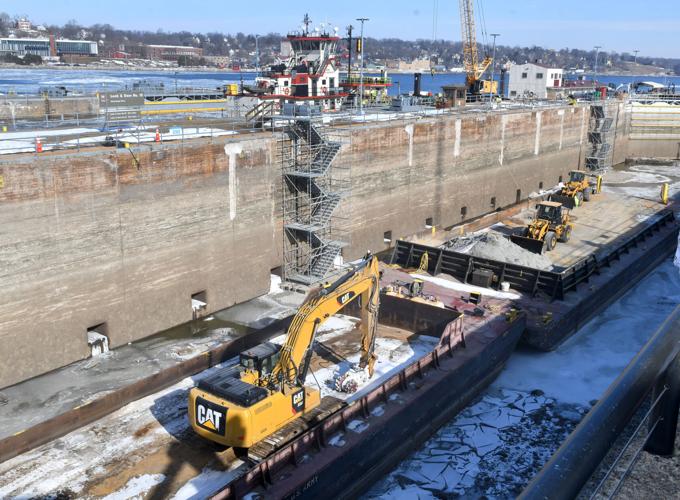
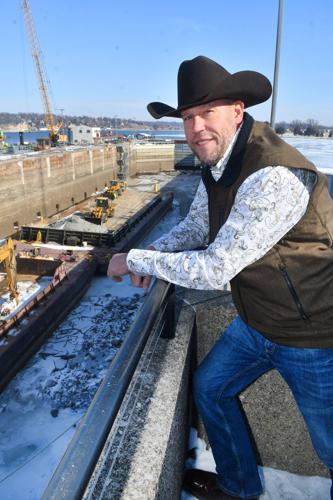
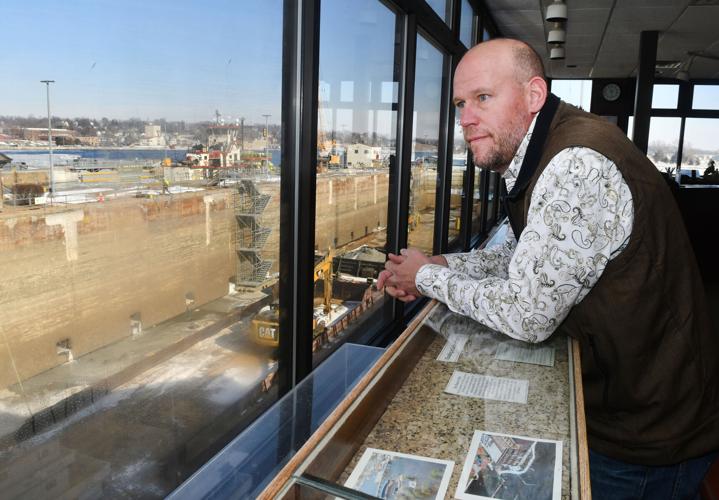
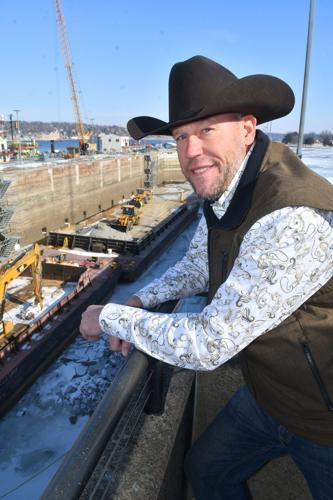
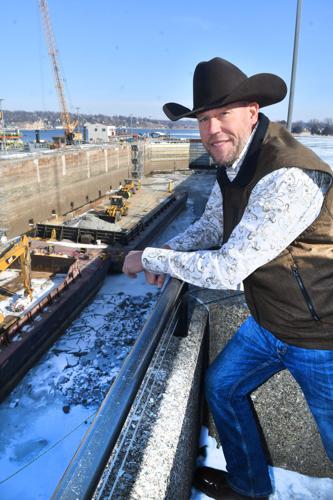
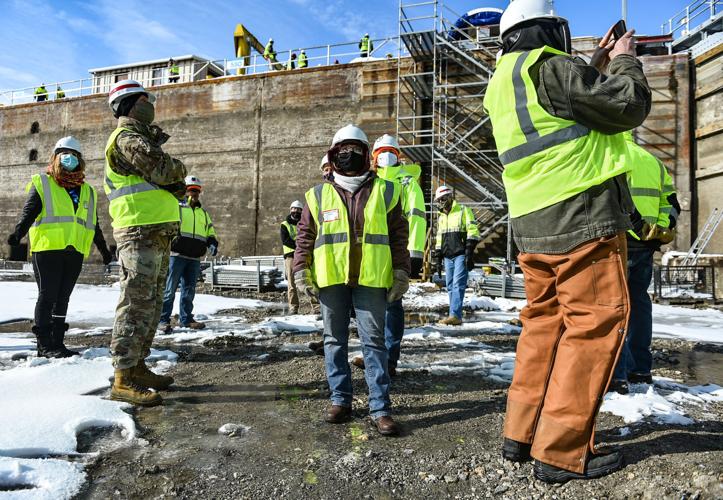
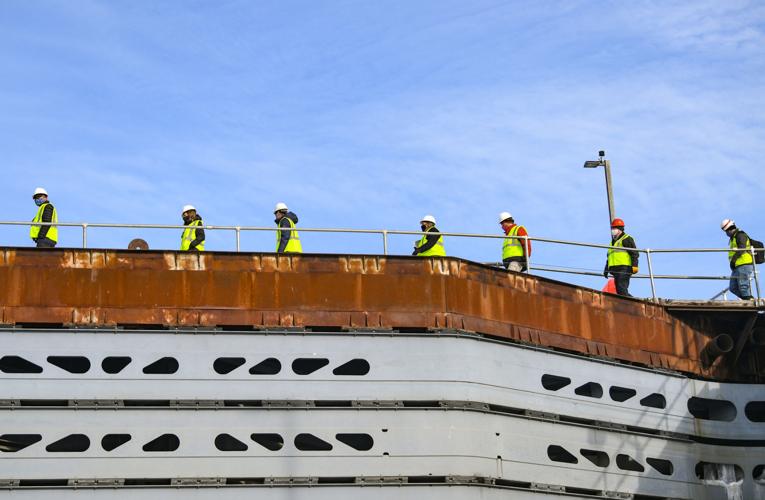
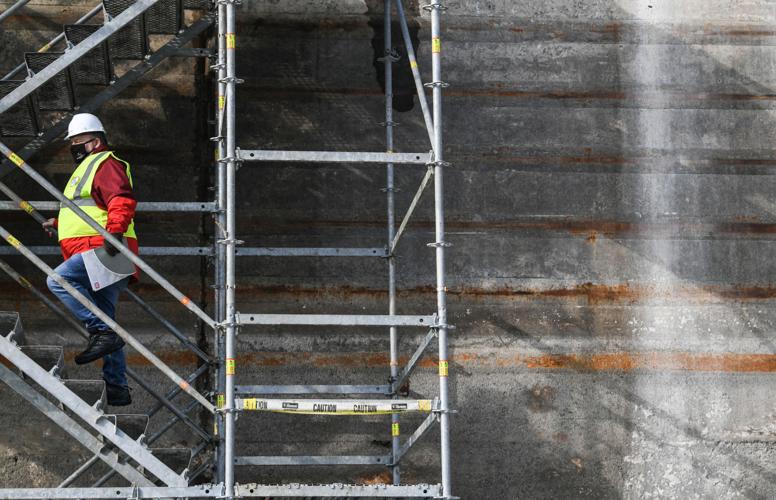
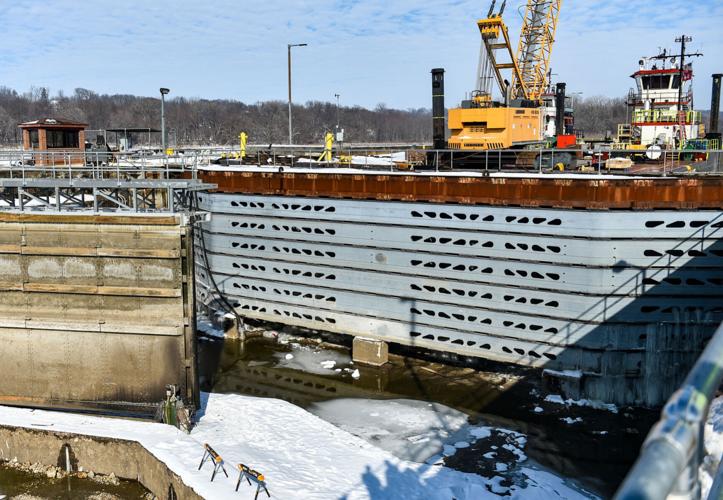
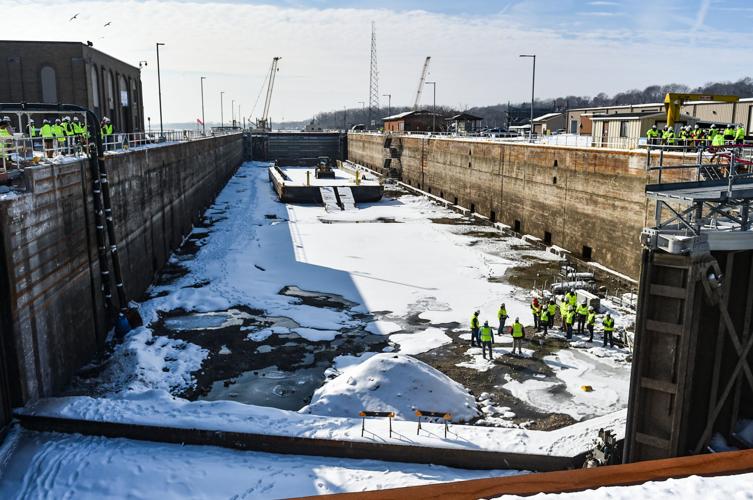
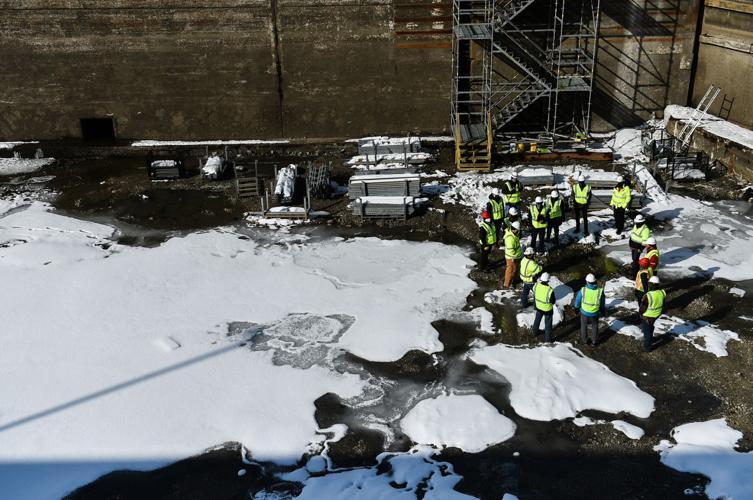
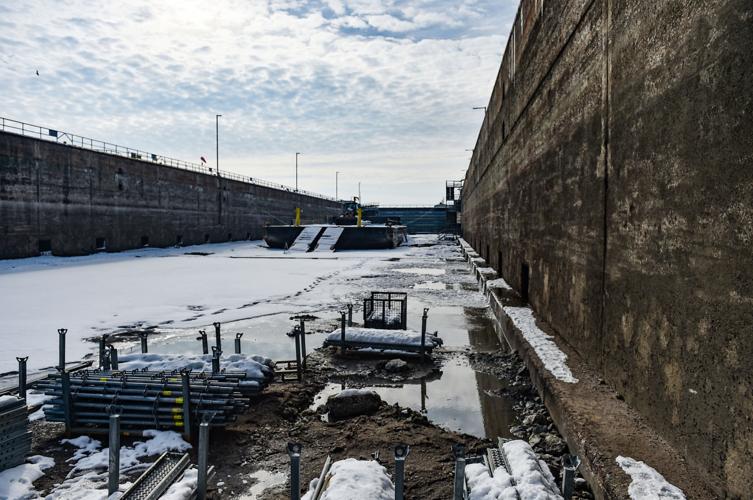
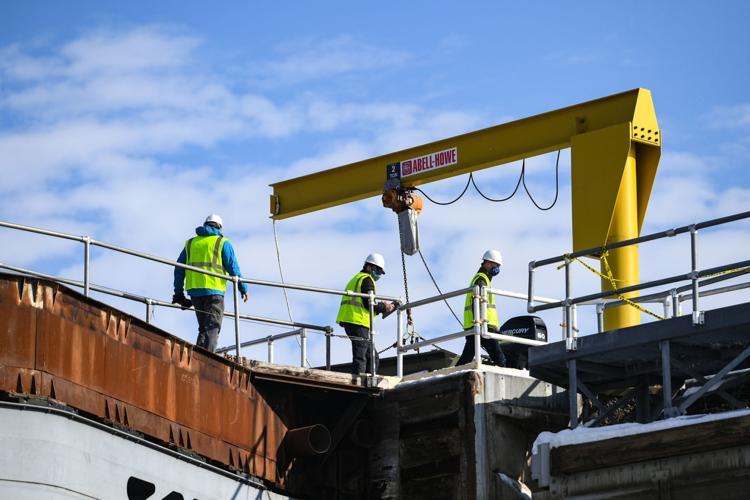
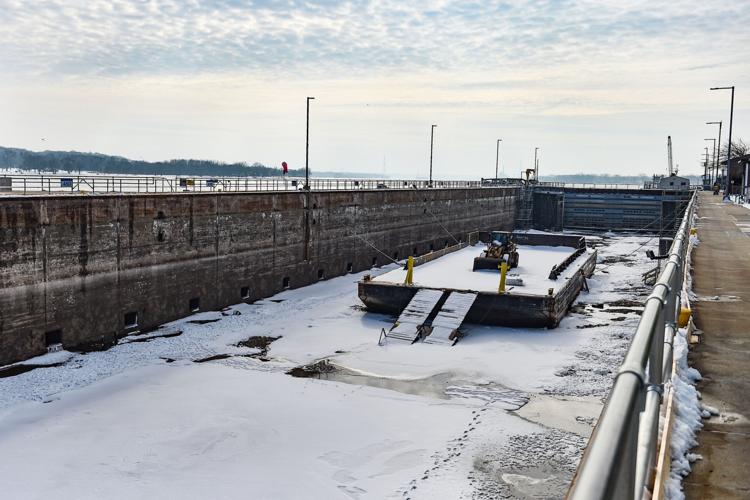
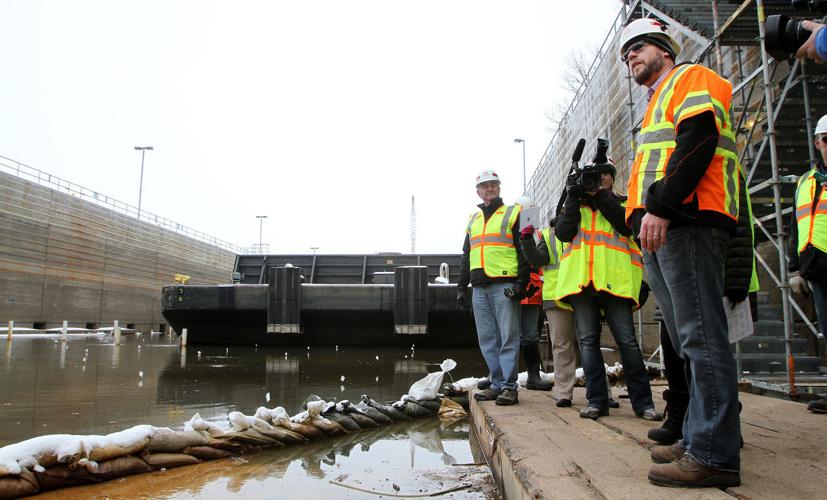
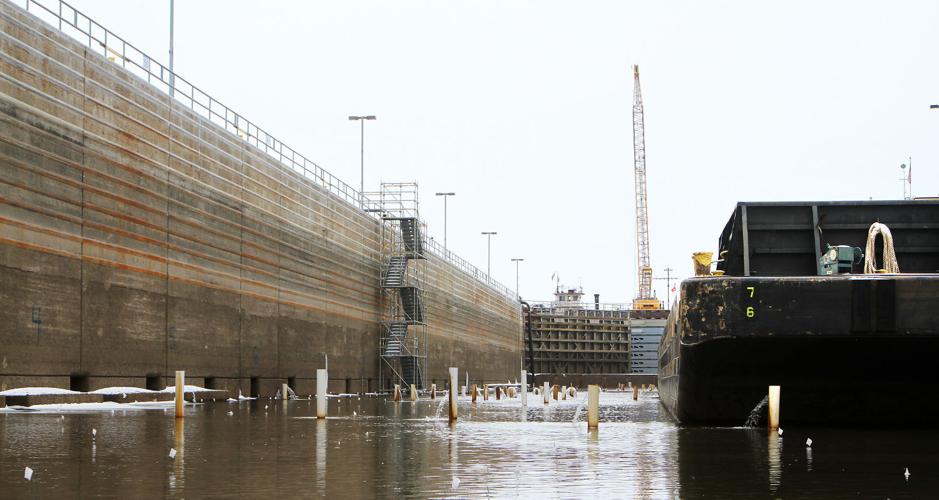
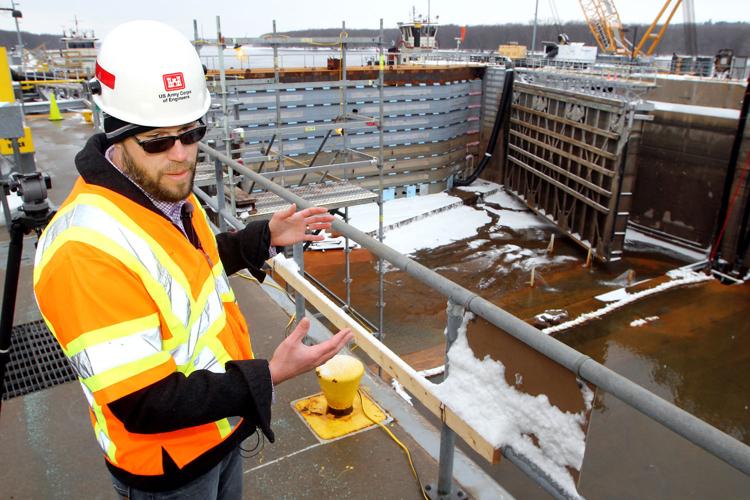
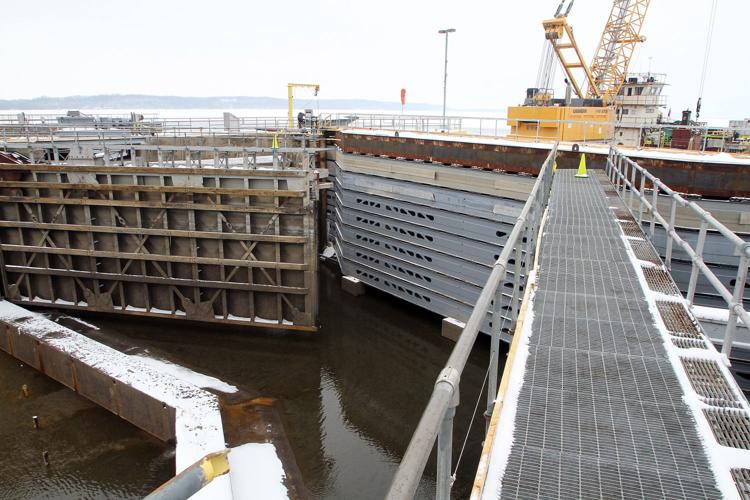
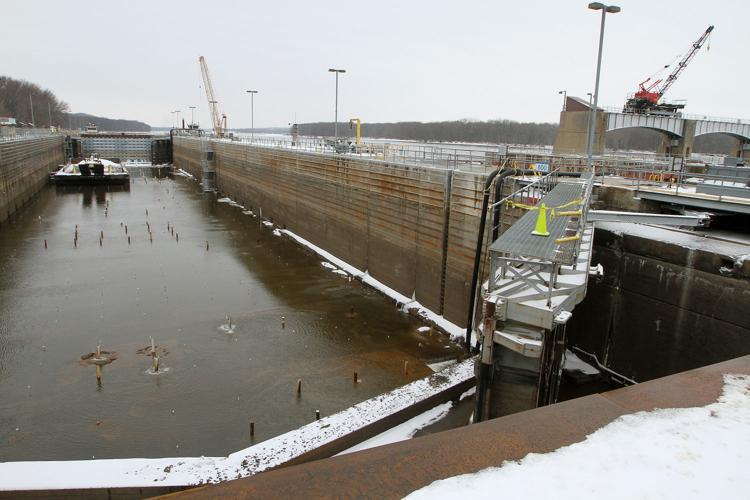
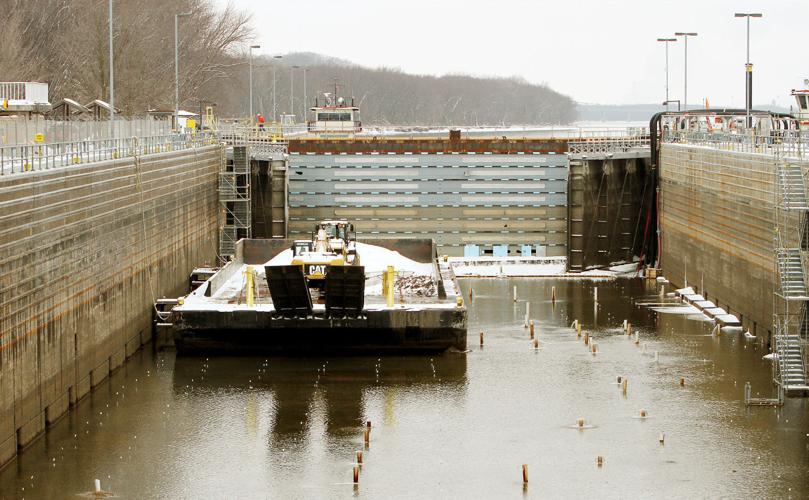
The U.S. Army Corps of Engineers invited lawmakers, Army officers and members of the media to tour Lock and Dam 15 and the dewatered lock on Jan. 26.
Matt Thurman, chief of maintenance for the Rock Island District, said locks are only dewatered every 25 to 30 years for the purpose of inspection and repairs and done during the winter months when barge traffic is the lowest.
"Most things we need here, we can’t go to Home Depot or Menards to get them," Thurman said. "We have to store raw materials and if something comes up, we generally have to fabricate it ourselves."
Thurman explained the empty lock would allow them to break concrete for new miter gate anchorage bars, replace beams and steal and to inspect pipes and wiring. The project will cost $305 million and is being paid for from the new infrastructure funding.