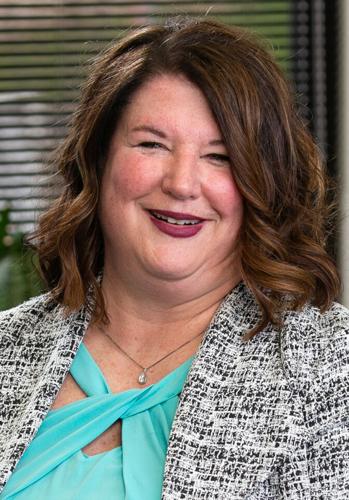


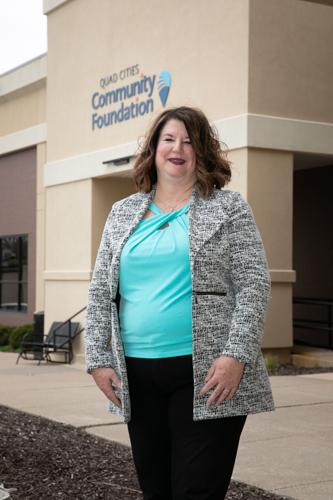
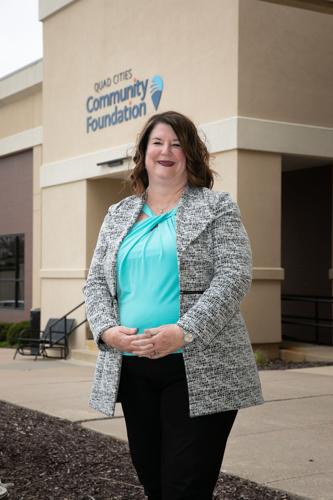
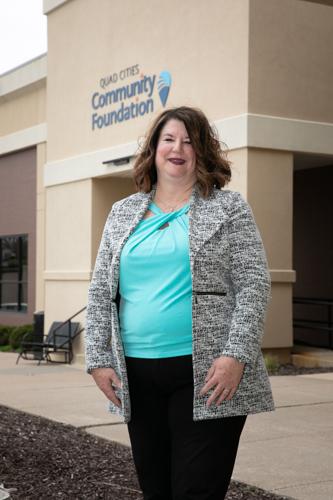
Sue Hafkemeyer is the new CEO of the Quad-Cities Community Foundation, one of the area’s largest charitable organizations.
She most recently ran the MercyOne Foundation of Dubuque. There, she raised more than $8 million to support MercyOne programs and started the foundation’s first planned-giving program.
Hafkemeyer started her career at Loras College in the role of the college's communication and marketing director. She became the director of the Dubuque Area Convention and Visitors Bureau, and partnered with other leaders to develop the city's $188 million river front revitalization.
Quad-Cities leaders are anxious for Hafkemeyer to leverage that experience for our region.
The Community Foundation is a major funder for some of the Quad-Cities’ most pivotal programs and charitable causes. As of this year, the foundation has granted more than $100 million back into the community. This includes recent grants to support training needs at Boys and Girls Clubs of the Mississippi Valley and Quad Cities Open Network,
People are also reading…
I sat down with Hafkemeyer just days before she started her new job to learn more about her goals and ambitions, and what she aims to accomplish in the Quad-Cities.
MC: You ran the visitor bureau in Dubuque for 14 years. How did that experience ready you for this job?
SH: The most impactful experience during my time there was destination development. I was fortunate enough to work on America’s River project, which really transformed our riverfront into a very vibrant tourist destination. It had been an industrial and manufacturing and kind of a rough area for a long time, and Dubuque had built a flood wall, but it didn’t connect people to the river. And of course we were seeing visitors coming from all over the world wanting to touch the river’s edge. So we were really trying to reinvent ourselves and create a destination that focused on the Mississippi River. So we rebranded our community “Masterpiece on the Mississippi.” The convention and visitors bureau was a lead partner in making that riverfront project happen. We did the fundraising, we did all the studies for the convention center. And then we partnered with the Mississippi River Museum, the city of Dubuque and the chamber of commerce to really bring all the entities together to fundraise in a much larger way.
MC: You’ve got to know that Davenport, in particular, is interested in developing its riverfront. It’s a resource that’s not being leveraged to its potential.
SH: That’s what excited me about this. There’s opportunity to work collaboratively, which I truly enjoy, on a similar project.
MC: You had to navigate a lot of red tape in the Dubuque project. What did you learn from that?
SH: A lot. In fact, the chamber of commerce was working on creating a fundraising campaign to help the City of Dubuque, and at the same time the river museum was looking at hiring a consulting firm. And, at the beginning, no one was working together. We realized it would make more sense to work together. So we made a collaborative agreement to showcase the project as one group, and once we did that we got so much support from all over, from private sector to public sector. We went to people’s homes to talk about the project – anywhere we could talk to people. That collaborative piece was so important, and we had a city council who knew how to get the private sector to help. In the end, we ended up with 98% approval in our surveys.
MC: How do you convince folks who don’t live downtown Davenport that spending tens of millions of dollars on riverfront development is in their best interest?
SH: I think from my experience, people want to see a bigger, broader vision for their community, and if you show a collaborative effort in a bigger way, people gravitate toward that. Once we showed a cohesive effort to leverage funds, not only locally but statewide and nationally, creating that transition would generate millions throughout the community. In the first phase of the America’s River project, we leveraged a half a billion dollars into the downtown. People immediately saw, and when we shared the vision we said, this is for all of us.
MC: Your main goal at the Community Foundation will be raising money for charitable causes. Your most recent position was running the foundation at MercyOne. What will you bring from that experience?
SH: Right after I started here, we began building our new cancer center. I was charged with running the capital campaign, not only with building the project but an endowed fund for those who need it. It’s been an inspirational thing for me. At the same time I’m involved in several community organizations – I’m the chairman of the board of the United Way, where we’re focused on eliminating poverty by focusing on education. I have a lot of experiences in my career and volunteer life that have prepared me for this position.
MC: Where do you see opportunities in the Quad-Cities?
SH: Probably what excited me most about the Community Foundation is the fact the area is already a vibrant community with a lot of passionate individuals who care a lot about the Quad-Cities. But the youth program the foundation has, Teens for Tomorrow, that really got me excited, because I know as much as we have a number of donors of all different ages, it’s important to cultivate philanthropy in our youth. That’s a learned experience. I think our colleges and universities are doing a great job educating our college students, too, on how to give back. When you talk about workforce development issues and developing employees, it’s not all about pay; it’s about experience. That really drew me to the organization.
MC: Talk about how philanthropy has become an important part of business culture.
SH: Employers who identify time for employees to give back – and I know a lot of employers looking at that strategy now – I think that’s going to attract young professionals to the workplace. All these students are coming out with that passion for service learning and service to the community. And I think that’s going to be a big part of employability moving forward.
MC: What did you hear from Quad-Cities community leaders before you took the position?
SH: I think the focus is on the importance of diversity, equity and inclusion. We talked quite a bit about the Q2030 program. We talked about the importance of scholarships in our nonprofits.
MC: What are your plans for the Community Foundation?
SH: While I don’t have specifics formed yet, I’m interested in coming in and meeting people so we can lay the groundwork to move forward. I’m looking forward to listening, learning and collaborating. Those are my three key initiatives as I move into the position.
Sue Hafkemeyer, CEO Quad-Cities Community Foundation
Sue Hafkemeyer

Starting June 1, Sue Hafkemeyer will join the Community Foundation from the MercyOne Dubuque Foundation, where she has been executive director for five years.
Sue Hafkemeyer - Quad-Cities Community Foundation president and CEO

Hafkemeyer
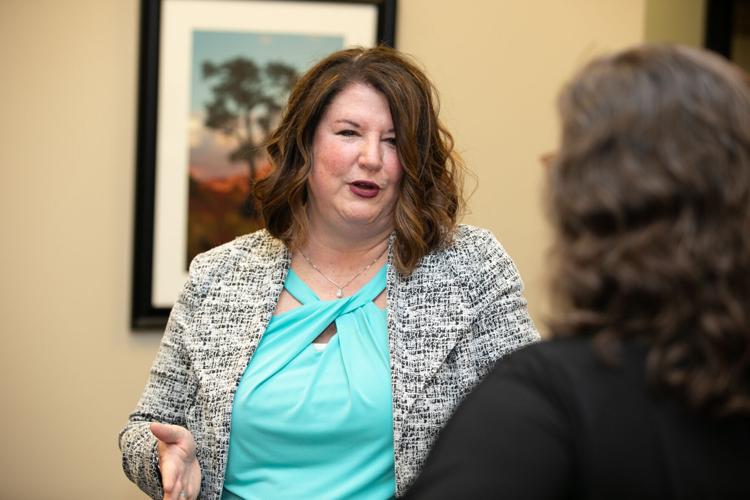
Sue-Hafkemeyer-outside-Community-Foundation-offices-02.jpeg

Sue-Hafkemeyer-outside-Community-Foundation-offices-01.jpeg

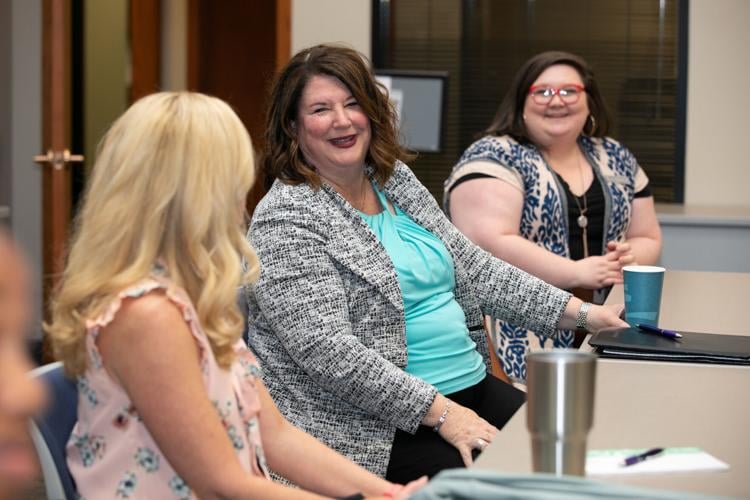
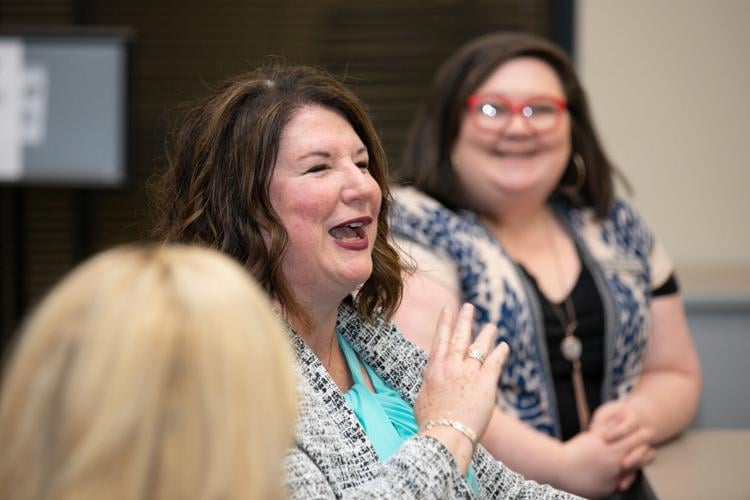
Sue-Hafkemeyer-meeting-Community-Foundation-staff-03.jpeg

Sue-Hafkemeyer-meeting-Community-Foundation-staff-02.jpeg

Sue-Hafkemeyer-meeting-Community-Foundation-staff-01.jpeg