



Self-driving combines like the ones seen in Christopher Nolan's sci-fi blockbuster "Interstellar" may soon become science fact.
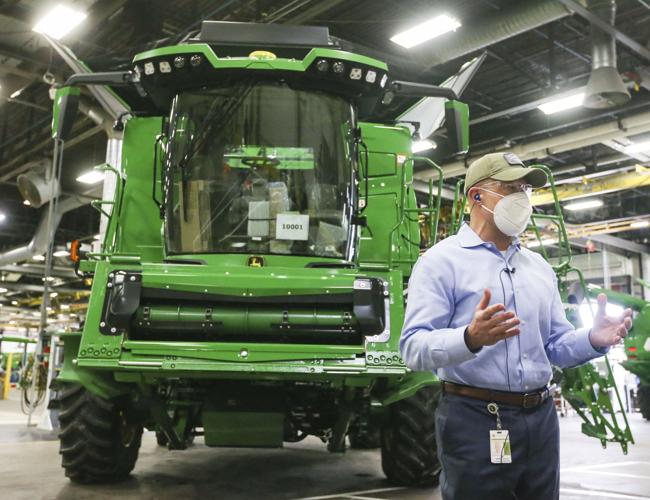
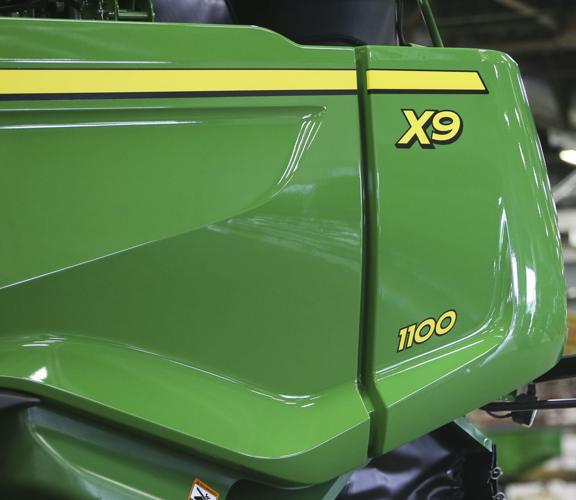
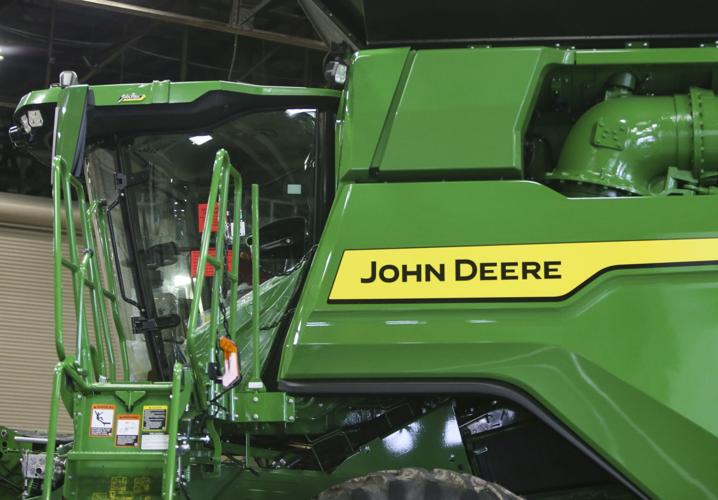
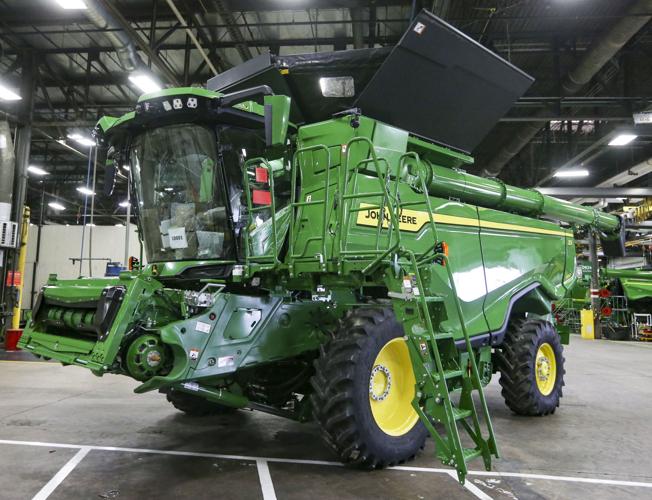
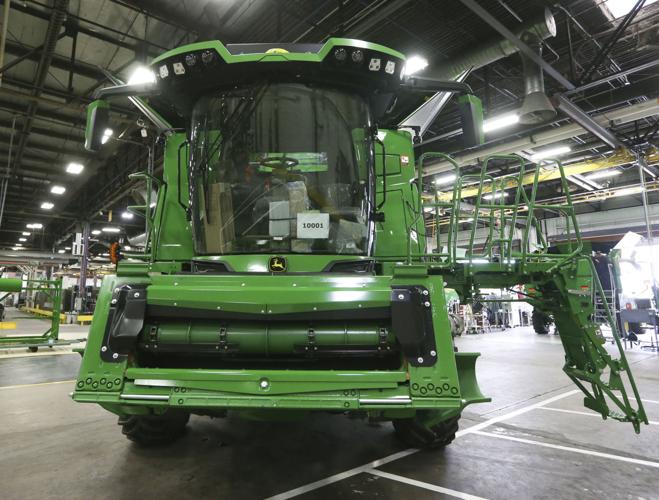
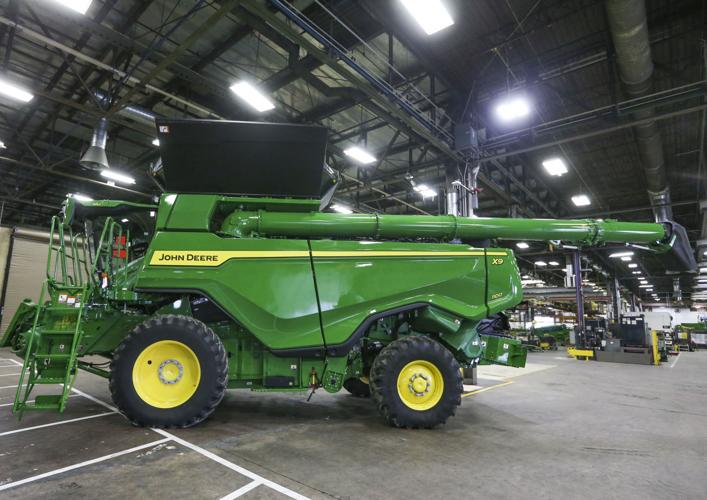
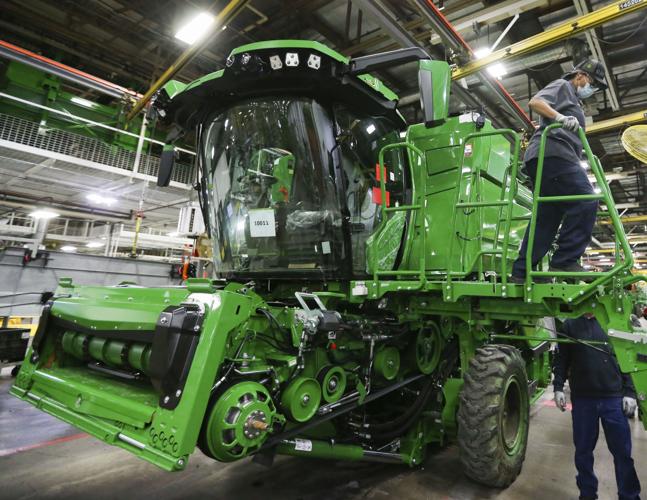
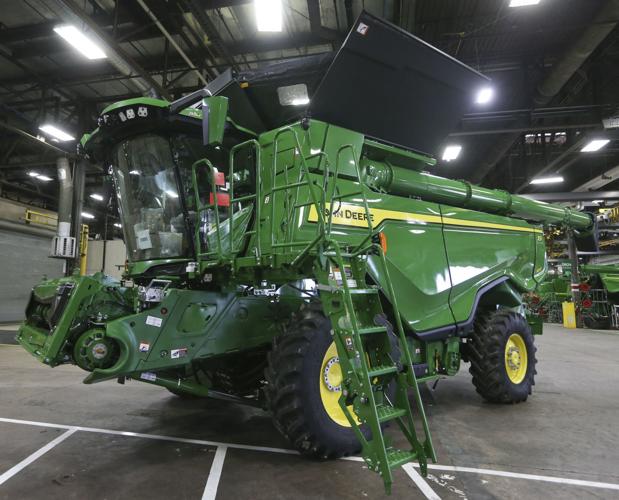
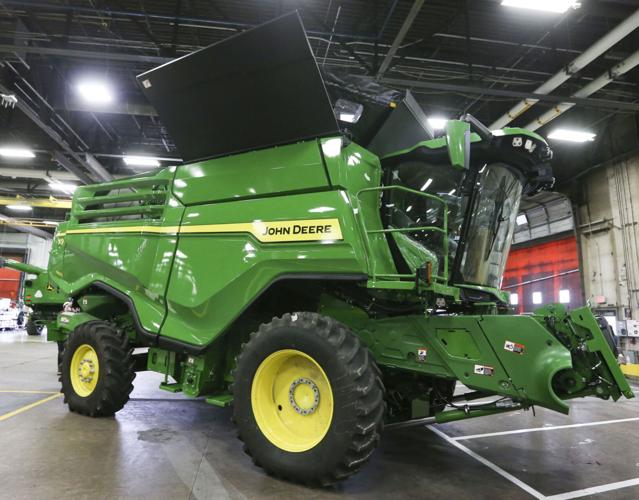
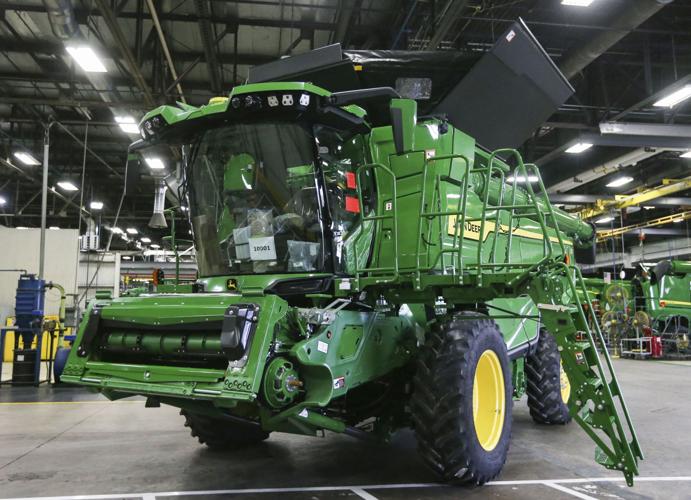
Moline-based farming equipment giant John Deere recently rolled out its new X9 combines being built at the Deere & Co.'s Harvester Works factory in East Moline.
Bigger, with more technology and increased fuel efficiency, the new machines mark a significant leap forward for the ag manufacturer, and for the industry. The combine also puts new emphasis on local workforce development, and how educators and companies are positioning for a new generation of workers with new skills.
The harvester boasts a full suite of onboard technology, tracking and imaging sensors, GPS and telematics that can make adjustments on the fly based on crop conditions. Put another way, this isn't your grandpa's combine.
People are also reading…
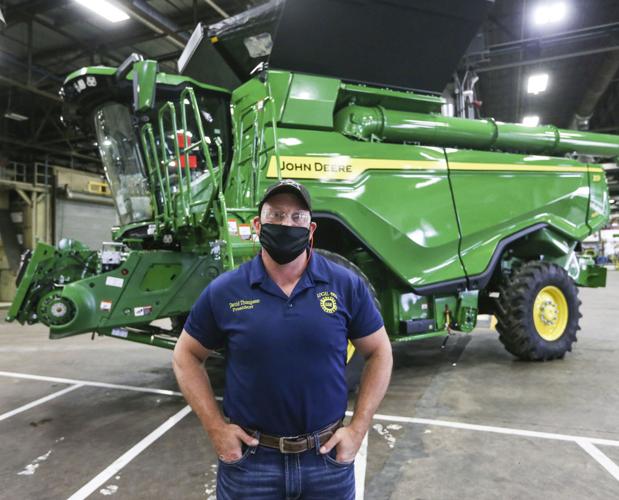
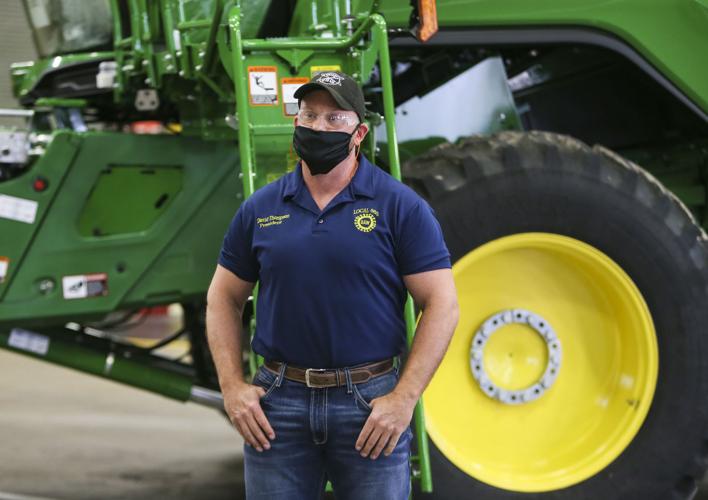
"It will pretty much drive itself and automatically adjusts to harvesting conditions," said David Thompson, president of the United Auto Workers Local 865.
An interactive menu gives recommendations for settings based on harvest priorities, including losses, broken kernels, grain cleanliness and straw quality.
Once settings are chosen, a series of cameras in the grain elevators and active tailing system make automatic adjustments to maintain the desired quality of work, said Nathan Kramer, product management leader for combines and front-end equipment at John Deere.
No operator input is required.
It’s the latest in an increasing amount of technology integration in farming.
For farmers, it means they can cut a field faster and harvest more grain per hour, specifically in tough, high-yielding, wet conditions, said factory director Jim Leach.
Having to make less calibrations means lower startup times, enabling farmers to harvest more bushels per day under short harvesting windows.
Rising temperatures and shifting weather patterns means the Midwest will endure longer and hotter summers, heavier rains and droughts that collectively are predicted to significantly reduce US agricultural production "without major technological advancements," according to the latest National Climate Assessment.
"It’s not only harvesting the crop, but doing so at the right time to ensure that the moisture levels and the economics behind the crop is maximized," Kramer said. "The technology we’re talking about ... is going to allow them to harvest the data that machine is gathering as we harvest the crops" to make better field-by-filed planting decisions and increase capacity, grain quality and overall efficiency for fuel savings.
A demand for new skills
For frontline workers, the new technology means having to take on different roles and skill sets.
With the increasing rise of industrial automation, robotics and artificial intelligence and the adoption of 3D computer aided design and advanced engineering tools comes a widening skills gap.
Manufacturers continue to report a shortage of available workforce with the skills and technical expertise to perform the higher-order work, impeding growth, according to latest Iowa Manufacturing Needs Assessment from Iowa State University's Center for Industrial Research and Service.
The 2020 survey of leaders at 218 manufacturers across Iowa showed hourly employees do not possess the technical skills required to operate the emerging technologies, and that workforce programs are not meeting initial expectations.
Nationwide, the manufacturing skills gap in the U.S. could result in 2.1 million unfilled jobs by 2030, according to a new study by Deloitte and The Manufacturing Institute, the workforce development and education partner of the National Association of Manufacturers. The cost of those missing jobs could potentially total $1 trillion in 2030 alone, according the survey of more than 800 U.S.-based manufacturing leaders.
Manufacturing is a core driver of Iowa's economy, employing more than 210,000 Iowans with an average wage of $53,960 and contributing $33 billion to Iowa's economy, making it the second largest business sector in Iowa, according to the Iowa State University report.
Manufacturers in Illinois account for 12.54% of the total output in the state, contributing $108.4 billion and employing 9.58% of the workforce, according to the latest figures from the National Association of Manufacturers. Illinois manufactures employed about 592,000 employees in Illinois, with an average annual compensation of $89,853.
"Talent remains a barrier in identifying opportunities, implementing solutions, running complex equipment and maintaining automated systems," according to the Iowa State University report. "Forum participants generally agreed that current pipeline outreach efforts are from meting their expectations. Specifically, the volume of people and the likelihood of transitioning from candidate to completing their first 90 days is not at the level companies expect."
However, respondents expressed optimism about progress being made and programs being undertaken to better attract and retain skilled workers.
"Internships and co-ops are beginning to pay off," according results of the ISU survey. "Some manufacturers are expanding the concepts of internships to existing employees to drive talent development and transition from hourly to salaried positions. Concepts such as work-based learning, apprenticeships and similar programs are gaining traction."
Hometown jobs
Rock Island High School junior Jay Richardson proudly donned a green-and-yellow cap with leaping buck logo as he sat down at the table in front of a crowd of roughly 100 onlookers seated in the convention hall ballroom.
With several strokes of a pen, the 17-year-old signed his commitment that will land him at John Deere's doorstep.
"I put in a lot of my personal motivation, a lot of my own effort, to become a better welder," Richardson told the Quad Cities Chamber in a post signing commitment interview after posing for pictures in front of an enthusiastic crowd of parents, educators and site hosts. "It’s hard work, but it’s very rewarding and — I’m trying to think of a big word for it, but I can’t. It’s fun."
More than 15 Quad-Cities area companies — including Deere, Eckhart, Per Mar, Musco Lighting, Midwest Alarms, M.A. Ford and others — gathered April 19 at Bettendorf's Waterfront Convention Center to sign more than 50 Q-C area high school students to registered apprenticeships in manufacturing, security, IT, health care and banking in an effort to create a new talent pipeline for businesses in need of skilled workers.
The students from Davenport, Rock Island, Moline, North Scott, Pleasant Valley and United Township schools will get paid while learning to be CNC machinists, certified nursing assistants, IT software engineers, IT security techs and welders.
Students will receive on-the-job training during the summer, typically between their junior and senior years, working full-time at partner sites. During their senior year, students work part-time and attend school half of the day. Upon graduation, students continue in their apprenticeship until all related training hours and standards are met.
Upon completion, students will receive technical certification in high-wage, high-demand careers, with the possibility of immediate employment, additional training certification and tuition assistance to pursue a degree program, said Moline-Coal Valley School District Superintendent Rachel Savage.
Richardson was among more than a dozen high school students who signed up for registered apprenticeships with John Deere as welders and software engineers.
"As we transform our products, we know we need to transform our factories (and workforce) to meet those needs," said David Ottavianelli, John Deere’s labor relations director who helped spearhead the apprenticeship program and its outreach. "CNC machining, welding, IT software engineering are critical elements in our long-term strategy and will need these type of technical roles in the future at John Deere."
Davenport West High School junior Sophia Iniguez, 17, has been taking computer classes since freshman year. This summer, Iniguez will work alongside a team at John Deere Global IT to develop, configure, assemble, test, debug and deploy new software, features or enhancements to one of Deere's dealer applications.
Iniguez said she's excited for the opportunity to gain a competitive advantage and early start in a lucrative career field desperate for workers.
Feeding the talent pipeline
Deere, though, is not the only Quad-Cities area company struggling to find qualified workers and opening its doors to new talent.
M.A. Ford, a Davenport-based company that provides high-performance cutting tools for the aerospace, medical, automotive and heavy-equipment industries, signed four Moline-Coal Valley High School students for its CNC machining apprenticeship.
"We are always looking for young talent to train and people with passion who want to do this … to fill the spots as the years go by to keep the company strong," said Production Manager Jeff Bigalk.
Students will learn to trouble shoot, develop and apply programs to control automatic machine tools for tuning and milling.
M.A. Ford recently purchased two new CNC mills and lathes and two more CNC grinders.
"When you have to be competitive with the world market, you need to get smarter on how you’re producing things so you can compete with the rest of the world," Bigalk said.
Meaning time is of the essence.
Automating and computerizing manufacturing process, using pre-programmed software to control grinders, lathes and mills to cut, shape and create different parts means faster cycle times and lower labor cost, Bigalk said.
Finding people with the skills and know-how to operate the machines, however, remains a constant struggle.
"Right now, getting people in the door is almost impossible," Bigalk said. "We’ve used temp services. And they come and they go. And they come and they go. ... People with knowledge before they walk in the door. That is huge. That's why programs like this are critical," by giving young talent an early start in high-paying skilled trades and other in-demand career fields to help area employers meet workforce needs and grow and attract local talent and inspire lifelong learning.
Students will learn to trouble shoot, develop and apply programs to control automatic machine tools for tuning and milling.
"As the workforce retires, we have to have a good, strong core coming up," Bigalk said. "And with these two to three years’ worth of classes their taking, plus on-the-job training, will put them leaps and bounds above everybody else walking in the door."
Tech surge
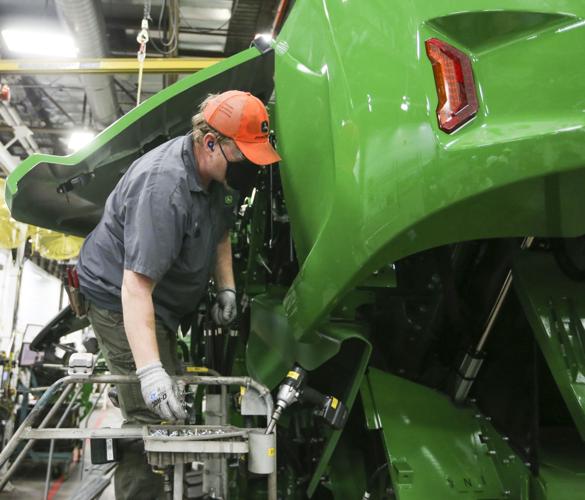
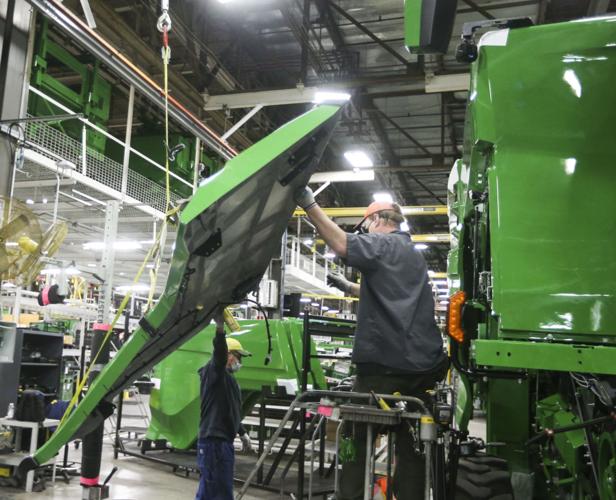
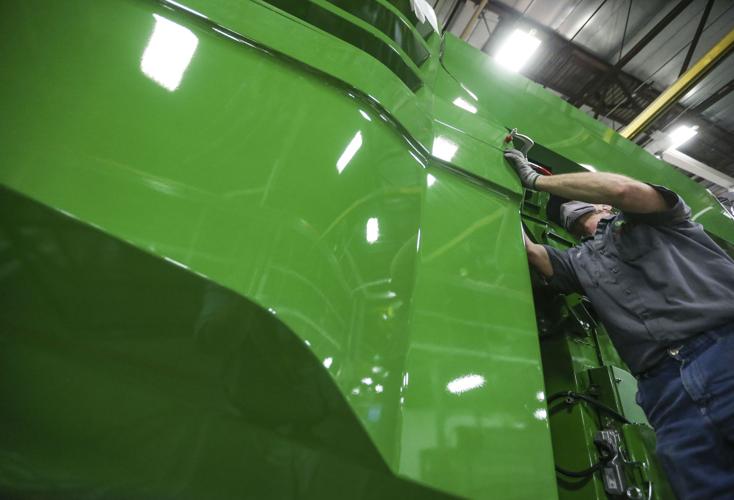
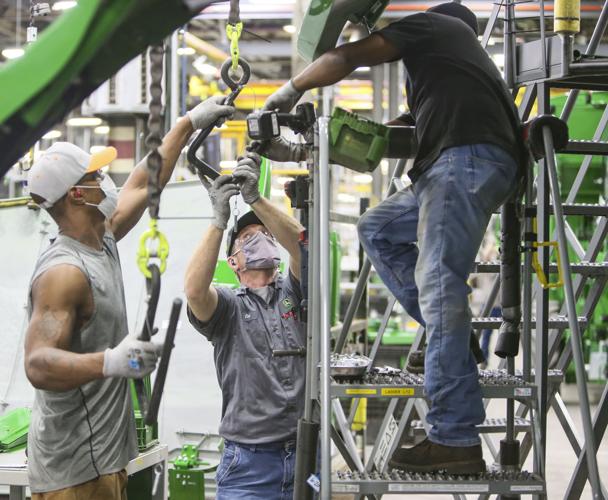
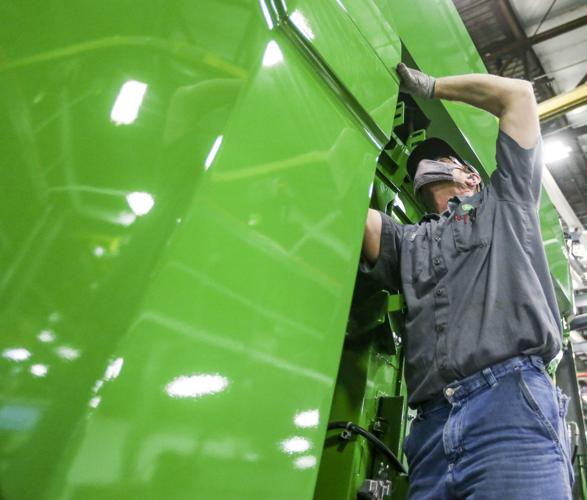
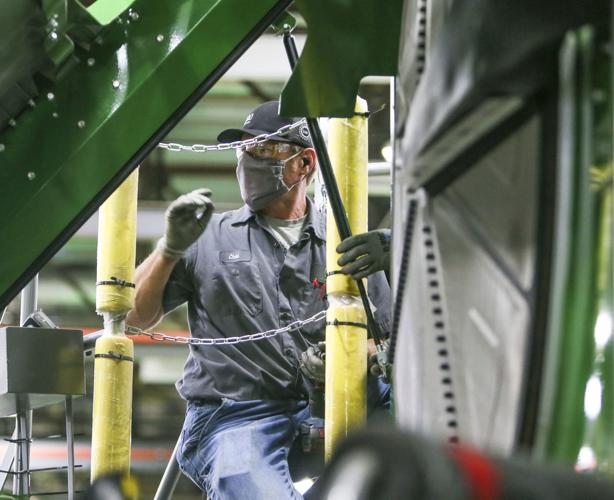
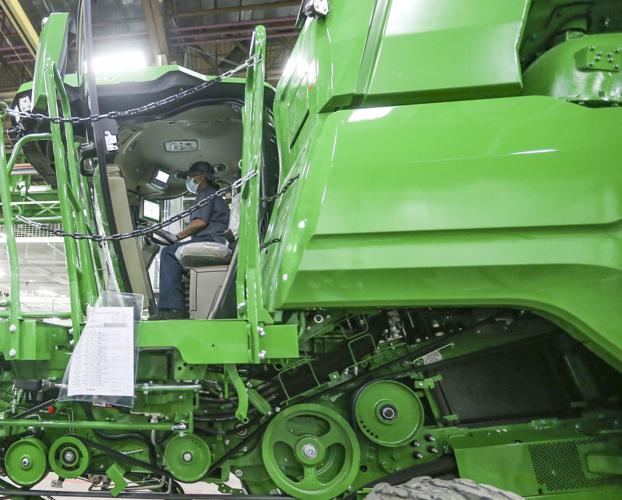
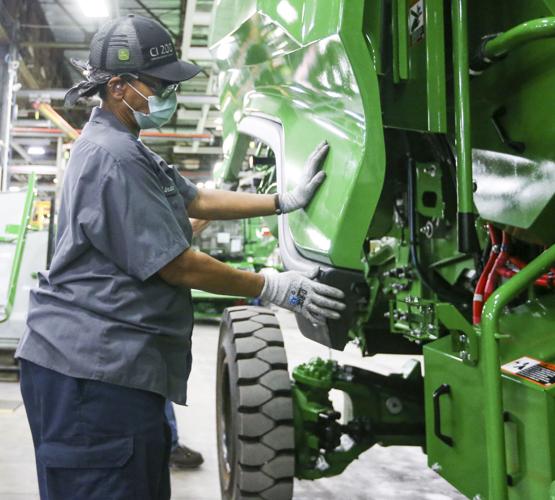
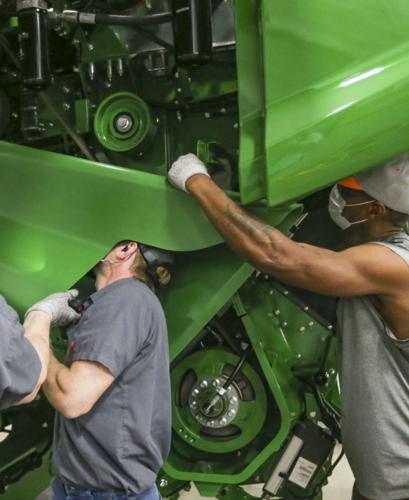
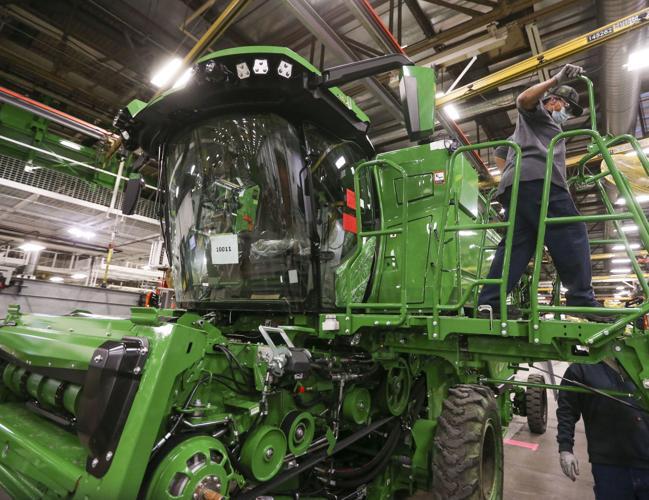
Back at John Deere, automation has meant the development of new worker training programs and smart tools — such as mobile connected torque guns that allow workers to quickly and easily check that all the bolts used on the combine are tightened to precise specifications.
However, not all factory jobs were spared.
"We've got one department that use to be a manual weld department, and now it's all automated with robots," said Thompson, the UAW president to works at Harvester Works. "And, yes, we did lose some jobs in that department manpower-wise, but we also gained from productivity and we shifted to other areas."
Thompson contends emerging technologies will create more jobs than they eliminate, reducing the need for assembly workers to perform menial tasks and improve production capacity.
"We continue to see our employment numbers going up here (at Harvester Works), and that's all promising looking forward to the future," Thompson said.
He estimated about 200 new factory positions have been added with the unveiling of the new combine series, including transfers from other John Deere branches and ongoing hiring.
"We hope that this combine will take a gain market share going forward, providing job security and much brighter future for our members. ... And we hope to see expanded jobs here," Thompson said.
In the 1970s, Harvester Works employed an estimated 5,000 people compared to about 1,500 salaried positions and 1,100 to 1,200 hourly employees currently employed at the factory, Thompson said.
"We have to adapt to technology and make sure our workforce is developing to it and developing their skills sets to support the technology," Thompson said. "You'll see more workers transition from certain skill sets," he said. "You'll see more people develop and adapt into more technical support roles. That is what I foresee for the future for our membership, is to develop their skill sets and grow with technology."
Pull-quote
"As we transform our products, we know we need to transform our factories (and workforce) to meet those needs." David Ottavianelli, John Deere’s labor relations director
About the X9
John Deere's new X9 is linked to an automatic speed management system — not much different from the cruise control system in today's modern cars — that takes multiple calibration points at different speeds and through-put levels, lowering the speed if the combine cannot achieve the desired output. If conditions improve, the combine’s speed increases to increase capacity.
"It will make adjustments on the fly ... to help the farmer be more predictive and more productive in the field so they don't throw grain out the back and they can maximize their harvest potential," said Jim Leach, factory manager.
The new combines deliver an average of 45% more harvesting capacity across all crops, while using 20% less fuel, according to the company.
The X9 1100 can harvest up to 30 acres of wheat and 7,200 bushels an hour in high-yielding corn — enough to fill seven semi-trailer trucks an hour.
Outfitted with JDLink, the technology enables machine-to-machine communication and makes it easy for the owner and operator to send field and agronomic data to and from the machine, as well as share machine performance information.
Farmers can utilize a mobile app to monitor combine performance and adjust settings as needed, from any location, as well as view live maps for a single field to compare results while harvesting.
The new combines also allow farmers to coordinate multiple combines and grain carts in the same field to save time and improve logistics, controlling the speed, direction and position of the grain cart tractor to automate unloading on-the-go.


