


Despite supply chain disruptions and worker shortages, Quad-Cities developers say they can't build new industrial space fast enough to keep pace with demand.
"They have industrial users facing demand for warehouse space they need to occupy within 90 days," said Caitlin Russell, president at Russell Construction and Development.
Russell and JLL, an international commercial real estate brokerage with an office in Des Moines, broke ground in October on a new 251,100-square-foot, pre-leased warehouse building in northwest Davenport. It's the first of six buildings totaling nearly 1.5 million square feet to be constructed as part of a planned 95-acre industrial park at 8730 Northwest Boulevard.
The new warehouse building has been pre-leased by trucking and logistics company Ryder System, which provides services to German pharmaceutical company Bayer AG. Bayer purchased U.S. seed and weed-killer maker Monsanto Co. in 2018 and operates a plant in Muscatine.
People are also reading…
"The tenant's interest in this location exemplifies how industrial demand is increasing in this region, reaching some of the highest activity in more than 10 years," Damen Trebilcock, vice president of Russell Construction, said in a statement.
The developer plans to break ground soon on a second, 300,000-square-foot spec building, expected to be completed and ready to occupy in the fourth quarter of 2022.
"Inside the city limits of Des Moines, we're accustomed to large, industrial developers entering the market and fueling the local economies," JLL Vice President Michael Minard said in a statement. "Now, the Quad-Cities, which boasts less than a 2% vacancy rate, is experiencing similar industrial demand."
Industrial property and land sales have fueled a resurgent commercial real estate market in the Quad-Cities in the third quarter of 2021 after being rattled by the COVID-19 pandemic.
Robust e-commerce and retail sales combined with supply chain challenges continue to drive demand for warehouse and distribution space in the industrial sector, according to Quad-Cities area commercial real estate brokers and developers.
"Manufacturing is strong. Supply chains are backed up, and when supply chains are backed up, there's need for warehouse space," said Thad DenHartog with Mel Foster Commercial Real Estate Services.
Year to date, as of the third quarter, Scott and Rock Island counties closed nearly $103 million worth of commercial real estate sales and leases. That represents a 74.5% increase from a total of nearly $59 million for the first three quarters of 2020.
"It looks like 2021 is about the same as 2020 and 2019 combined," said Jim Tansey, president of Hawkeye Commercial Real Estate.
Third quarter market totals were nearly triple that of 2020, increasing to $44.4 million from $15.4 million for the third quarter of last year, according to commercial real estate sales and lease data compiled by Hawkeye Commercial.
"The big movers in the third quarter has been industrial sales in particular," Tansey said, which totaled nearly $14 million in the third quarter.
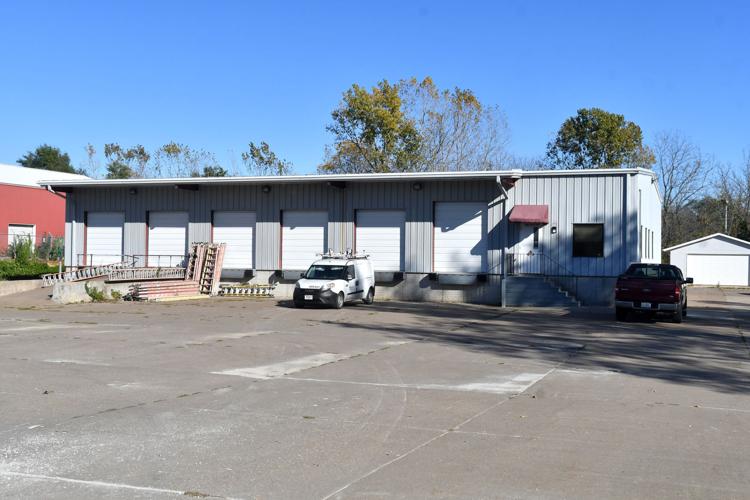
Nearly half of that came from the $6.75 million sale of 120,500 square feet of industrial space at 5000 Tremont Ave. in Davenport by a Texas-based investor who purchased and flipped the property as an investment, said Dave Gellerman, CEO of Hawkeye Commercial Real Estate.
Land
Land was also a big mover, with sales increasing year over year to $22.2 million for the first three quarters of 2021 compared to $6.5 million for same period last year.
"Land across the board is a very hot segment right now," said John G. Ruhl, president of NAI Ruhl Commercial Company. "That is to accommodate construction of new retail buildings, medical office (space) and also new residential subdivisions and industrial facilities."
Such as Russell's $3.3 million purchase of the 95 acres near Northwest Boulevard and Interstate 80 for its new industrial park, and the $6 million sale of 158 acres for construction of a 2.9 million gross square-foot Amazon fulfillment center along 155th Avenue immediately north of Interstate 80 and west of the Davenport Municipal Airport.
The latter, however, is not reflected in the latest figures, as the property, previously owned by The Shriners Hospitals for Children, was not listed by the Shriners in MLS listings in the Quad Cities.
"We're seeing land move and going for premium rates for decent locations," Ruhl said.
Investors are purchasing real estate to hedge against inflation and take advantage of low interest rates, according to local brokers and developers.
Commercial real estate traditionally performs well in periods of high inflation, Ruhl said. Rental rates, and thereby income, rise with increasing prices. And high demand and limited supply drives property prices higher. As long as price increases outpace the rate of inflation, returns will be positive on a relative basis.
In many cases, added Ruhl, land that sat idle for some time "is now receiving activity."
"It's certainly a bump up in the market," Ruhl said.
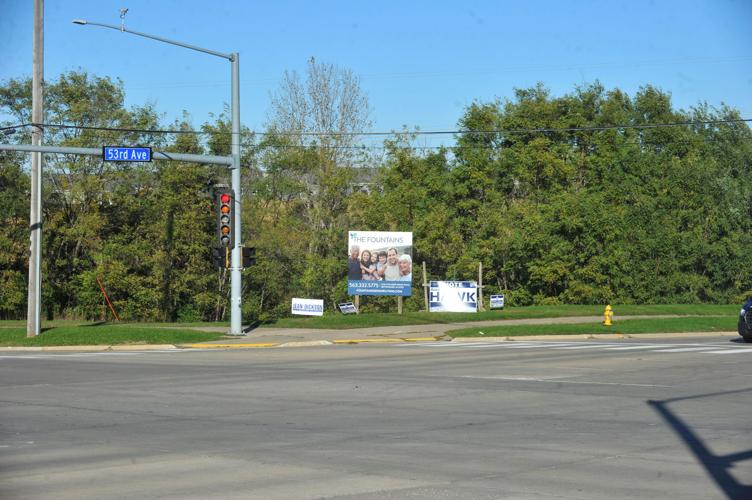
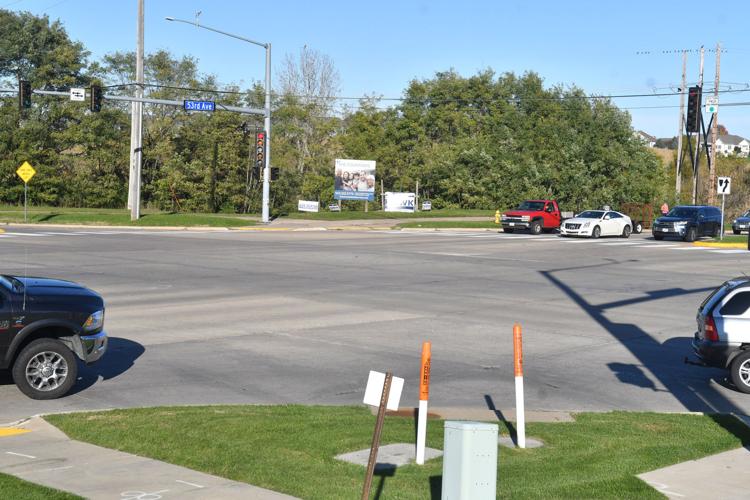
Russell Construction, for example, purchased 38 acres at 4607 East 53rd St. near the Davenport-Bettendorf border for nearly $7 million in September. The company will develop the northern, roughly 18 acres with commercial and retail uses, and Dolan Homes will develop the southern 20 acres with single-family and townhomes.
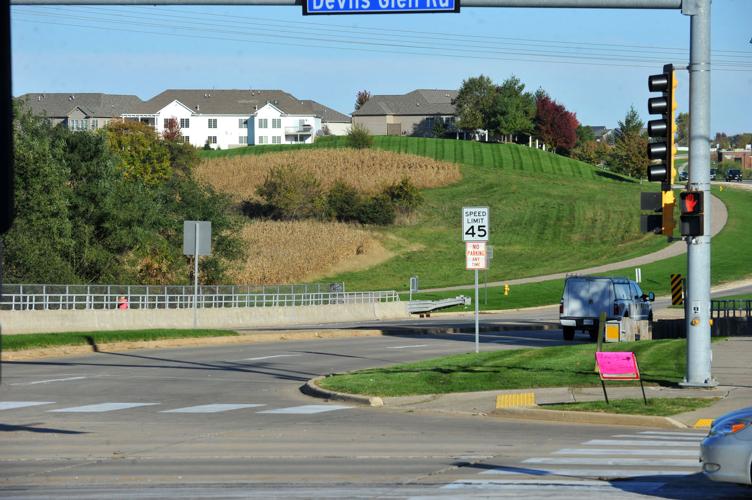
Since the early 1930s, the property had been a working farmstead and is considered the last developable piece of real estate of its size west of Devil’s Glen Road.
Prior attempts to develop the land over the years failed to come to fruition.
"Absent the partnership with Dolan Homes, we wouldn’t have been able to move forward either," Caitlin Russell said of the sheer size of the nearly 40-acre development.
Industrial
Industrial sales showed the largest year-over-year increase, rising to nearly $34 million year to date from nearly $10 million for the first three quarters of 2020.
While demand for industrial space "is very hot, there's a serious supply problem," Ruhl said. "We have a lack of existing inventory for quality, well-located, modern industrial buildings" that has fueled a spurt in new construction.
"Simply because there is no product existing for someone to buy or lease," he said.
DenHartog of Mel Foster Commercial Real Estate Services said he has never seen industrial occupancy rates as high as they are.
"Very little industrial real estate is available for sale or lease," he said.
Much of the warehouse space available in the Quad-Cities is outdated and lacks the the ceiling heights "or construction that national users expect or require," said Caitlin Russell of Russell Construction.
Russell's recently-announced 250,000-square-foot, build-to-suit warehouse is believed to be the Quad-Cities largest industrial lease in more than a decade. The planned temperature-controlled, industrial warehouse buildings will feature 32- to 40-foot ceilings; insulated metal wall panels; LED lighting; early suppression, fast-response sprinkler system; fiber optic service; standard dock equipment and overhead doors; and other customizable options.
"Speculative space is getting eaten up, or pre-leased and under contract, during construction, if not shortly after construction is completed," Russell said.
While soaring material costs created sticker shock for builders, developers and contractors, causing some to cancel or postpone projects, "now, because there's not other alternative with the lack of product, they're just having to absorb that cost," Ruhl said.
Added Hawkeye Commercial's Tansey: "People are realizing the state of Iowa is a good environment. Being in the middle of the country, there's some good distribution opportunities for companies, and evidence by Amazon making a big presence here and, apparently, continuing to do so."
Retail
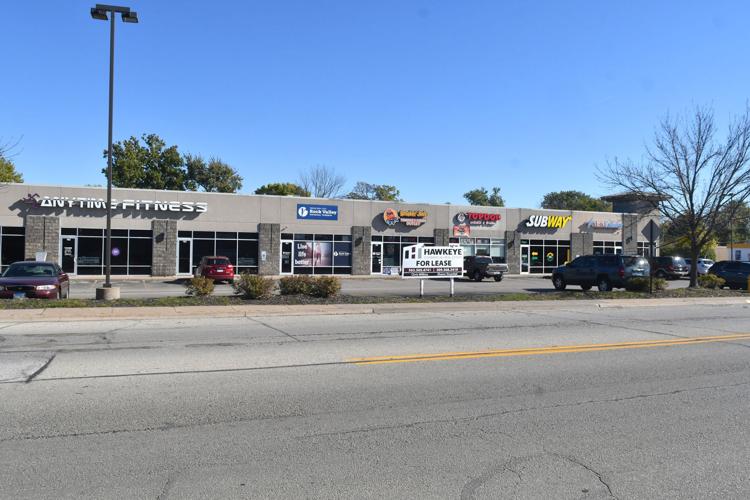
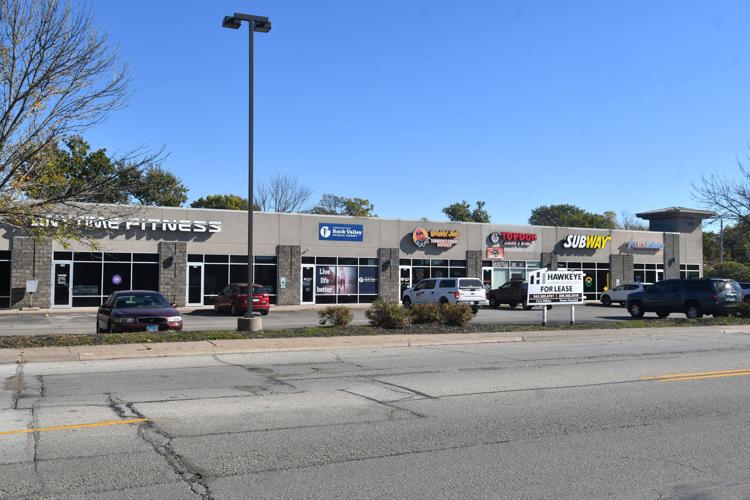
Retail sales, too, were up year over year for both Scott and Rock Island counties, with Scott County increasing to $9.4 million from $6 million while Rock Island increased to $4.8 million from $2.8 million.
Rock Island, though, outpaced Scott County for retail sales in the third quarter, with all but two retail sales occurring in Rock Island County, including a $1.85 million sale of 62,610 square feet of retail space in Moline at 1518 5th Ave.
Retail leases were the opposite.
While the global pandemic upended business in the last year, that didn't stop businesses and retail stores from opening or expanding in the third quarter.
Though retail took a big hit over the last 12 to 18 months, "a lot of that pent up demand is coming back into play," Tansey said.
"The retail environment has been strong," he continued. "Obviously, people are getting out spending money. We all know about the employee shortage that's hampering retail, but there's been a lot of strong activity. I think a lot of plans were put on hold during the pandemic, and some of those are coming back into fruition now."
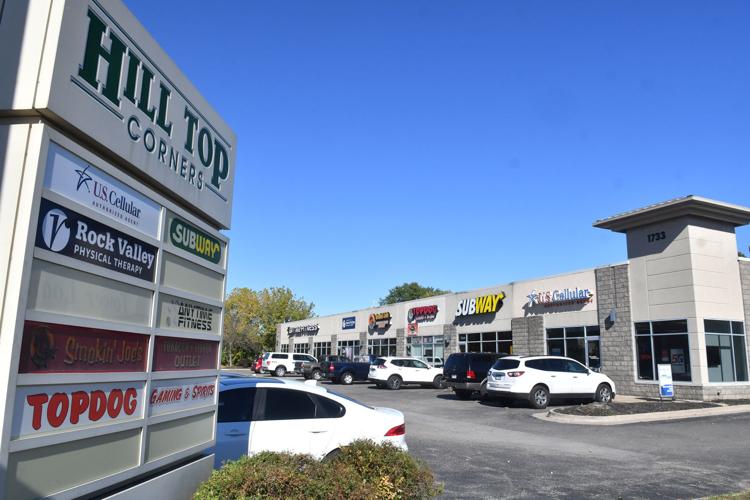
He pointed to Russell Construction's development of Birchwood South on East 53rd Street, which include plans for sit-down, full-service restaurants, quick service/drive-thru restaurants, professional services and other retail uses.
"The neighborhood retail strip center market is very strong, particularly in northeast Davenport and Bettendorf," Ruhl said. "And that is to accommodate new tenants wishing to serve all the housing development. Those new tenants include quick-serve restaurants."
Tansey, too, pointed to planned expansion of the TBK Bank Sports Complex and surrounding retail northwest of Middle Road and Forest Grove Drive.
Vacant office and industrial properties in the Quad-Cities as well have been converted into condos and apartments.
"And those residential properties are thriving, and that's driving more demand for restaurants and entertainment venues," Ruhl said. "Frankly, the restaurant business is pretty strong right now. Those that have adapted (during the pandemic) are doing quite well. We have not seen many closures. We see more takeout, and people, frankly, are anxious to get out to restaurants. So we’re seeing quite a few new restaurant openings."
High construction costs and delays in receiving equipment and materials, though, has suppressing some of the retail demand, Tansey said.
So too has a tight labor market, with retailers struggling to find and retain workers amid increasing sales, despite offering higher wages, sign-on bonuses and other perks.
"It’s slowed some potential new restaurant and retail deals, because the operators are concerned about being able to staff the new location," Ruhl said. "For instances, we’re entertaining a new restaurant development opportunity in Bettendorf, but they’re waiting to see what happens with the labor market. The No. 1 issue for businesses is being able to attract and retain quality labor."
Office
Office sales increased in the third quarter to $5.1 million from $3.4 million the previous quarter; however, on the whole, office sales were down to $11 million for the year compared to $17 million in 2020 year to date.
"Office is fairly strong right now, even as people figure out the whole return-to-work scenario," said DenHartog with Mel Foster Commercial Real Estate Services.
He said he expected to see more office vacancies, "with the thought people could work from home longer, and I’m seeing a reversal of that."
"We are seeing tenants wanting to renew and stay in their space. Or, they downsized and are now upsizing the office by bringing more people back to the office," DenHartog said. "I'm not seeing a mass exodus from office space."
Long-term commitments, though, have been hard to secure as employers rethink their space needs amid lingering uncertainty over the return to the office and the conditions associated with pandemic measures, including workplace vaccine mandates. That has fueled speculation that companies will renew their leases but flock to smaller spaces, creating vacancies in many areas.
"I’ve got a lot of national tenants renewing leases one year a time," DenHartog said. "Employers are starting to realize the reason we went to an office before the pandemic. They’re starting to realize it is better when people are together and collaborating. They’re starting to see what they lost without people in the office, whether that’s productivity, collaboration, ideas, synergy and customer contact. There’s only so much you can do from your home."
Ruhl said large tenants are requiring provisions that allow for early terminations, with some sort of associated penalty, for lease renewals or new leases as a "safety net" due to the "lack of clarity on what the immediate future brings for their employees and whether they’ll return to the office."
While "somewhat cloudy," Ruhl said he is "confident that we’re going to see a return of (office) occupancy" as companies start to see performance slip with employees working remotely.
"I think this is somewhat of a blip, and I expect we’ll see the office market improve in the next two quarters," he said.
Large tenants have moved to the Iowa Quad-Cities, leaving vacancies in Illinois, including, Ruhl said, United Healthcare, which vacated a large space in downtown Moline and "drastically reduced their footprint.”
Architecture and engineering firm Shive-Hattery moved from Moline to Bettendorf and held a ribbon-cutting in September for a new Quad-Cities design office at 2144 56th Ave. W.
Materials producer and quarry operator RiverStone Group as well moved across the Mississippi River into a new 30,000-square-foot corporate office at 4640 E 56th St. in Davenport.
Iowa vs. Illinois
While commercial real estate activity in the Quad-Cities recovered in 2021, the gains have been sharply lopsided. Scott County accounted for 71% of the total market volume for the first three quarters of the year, with Rock Island County accounting for 29% of total volume.
"The Iowa side has definitely been thriving at a higher level than the Illinois side," said Jim Tansey with Hawkeye Commercial.
In just the third quarter alone, Scott County saw $31 million in commercial real estate sales and leases, compared to $29.5 million for Rock Island County for all three quarters of 2021.
"We hear a lot of people that don't like the economic and political environment in the state of Illinois, and prefer that in Iowa," Tansey said. "So there are some properties that are for sale in Illinois that had they been located just as well in Iowa, they'd probably move faster and at a higher dollar amount."
Ruhl said much of the new commercial growth is following new housing that's being constructed in the Iowa Quad-Cities.
"That’s not to say Illinois is without transactions," he said. "Illinois is enjoying very good activity, it’s just Iowa is slightly stronger."
DenHartog said Mel Foster Commercial agents spend much of their day fielding calls from businesses in Illinois wanting to relocate to Iowa for various reasons, "and the supply just isn’t there."
"A lot of businesses on the Illinois side of the river that want to move to Iowa, but face higher input cost to build and relocate," he said. "And (they) end up at the end of the day staying in Rock Island County, but the demand is higher on the Iowa side of the river."
Outlook
Overall, brokers and developers expect the commercial real estate market will continue to grow at its current pace for the end of 2021, fueled by low lending rates and inflationary pressures.
"Demand seems to be good," DenHartog said. "We’re consistently showing real estate and people are very upbeat on the economy."
Tansey, too, predicts the market will keep "rolling forward."
"There are a lot of deals in play," he said. "I don't know how long this pent up demand is going to run itself out, but, like I said, there were a lot of projects put on hold over a year-and-a-half that seem to be green lit this year."


