


Photo provided by DepositPhotos
A 74-year-old amateur metal detectorist put 21 years of finds under the hammer this May, and the estimate came in around $13,750. Most hobby spending never has to answer for itself this precisely: what does two decades of weekend digging actually return? The auction record has an answer.
A $13,750 auction put a price on one detectorist's two decades in the field
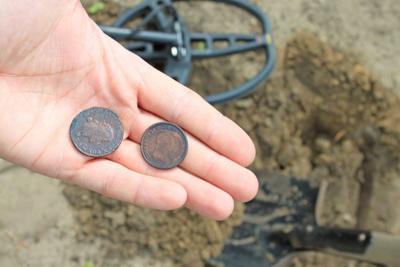
According to Talker News, Nettie Edmondson of Bedfordshire, England, has been sweeping fields since 2005 and has found at least one gold item every year since. Her collection of more than 100 pieces, including a Roman gold ring with its intaglio still intact and rare medieval brooches, went to auction on May 16 with Hanson Ross Auctioneers expecting the lot to bring roughly $13,750.
People are also reading…
That works out to about $650 a year, which places Edmondson's haul at the modest end of a range with a very long tail.
The amateur record runs from a 27.2 kg nugget to seven-figure hoards
The Hand of Faith, a 27.2 kg gold nugget found near Wedderburn, Australia, in 1980, remains the largest ever located with a metal detector. It was 30 cm below the surface. The finder sold it to a Las Vegas casino for over $1 million.
Nine years later, a prospector in Mexico's Sonoran Desert dug up the 26.2-pound Boot of Cortez using an entry-level detector from an electronics chain. Heritage Auctions sold it in January 2008 for $1,553,500, nearly four times its melt price at the time.
Hoards outperform nuggets on volume. The Staffordshire Hoard, found in an English field in 2009, produced nearly 4,600 Anglo-Saxon gold and silver pieces and drew a £3.285 million appraisal from the Treasure Valuation Committee. The Lenborough Hoard, 5,251 silver coins buried around 1035 AD and dug up in 2014, was appraised at £1.35 million. In both cases, the finder split the money with the landowner.
Entry cost is low, and the ceiling barely moves with spend
The Boot of Cortez came out of the ground on a budget machine. The Staffordshire finder had been detecting for 18 years before his hit. On this record, time in the field counts for more than the receipt on the gear, though the gear question still comes up first for anyone starting out.
At the top of the consumer market, two machines dominate the conversation, and this Minelab Equinox 900 vs. Minelab Manticore comparison breaks down where the extra spend pays off and where it doesn't. For anyone testing the water before committing, the broader metal detector market starts under $200, which puts the hobby's entry cost below a set of golf clubs.
The Boot of Cortez is back on the market, and the math has changed
The return question isn't closed. In 2026, the Boot of Cortez went back up for auction after 18 years in a private collection, with gold now priced at roughly five times its 2008 level. Whatever it brings, the sale will reset the benchmark for what a single find can be worth, and it hands anyone picking up the hobby in 2026 a much bigger number to measure against.